
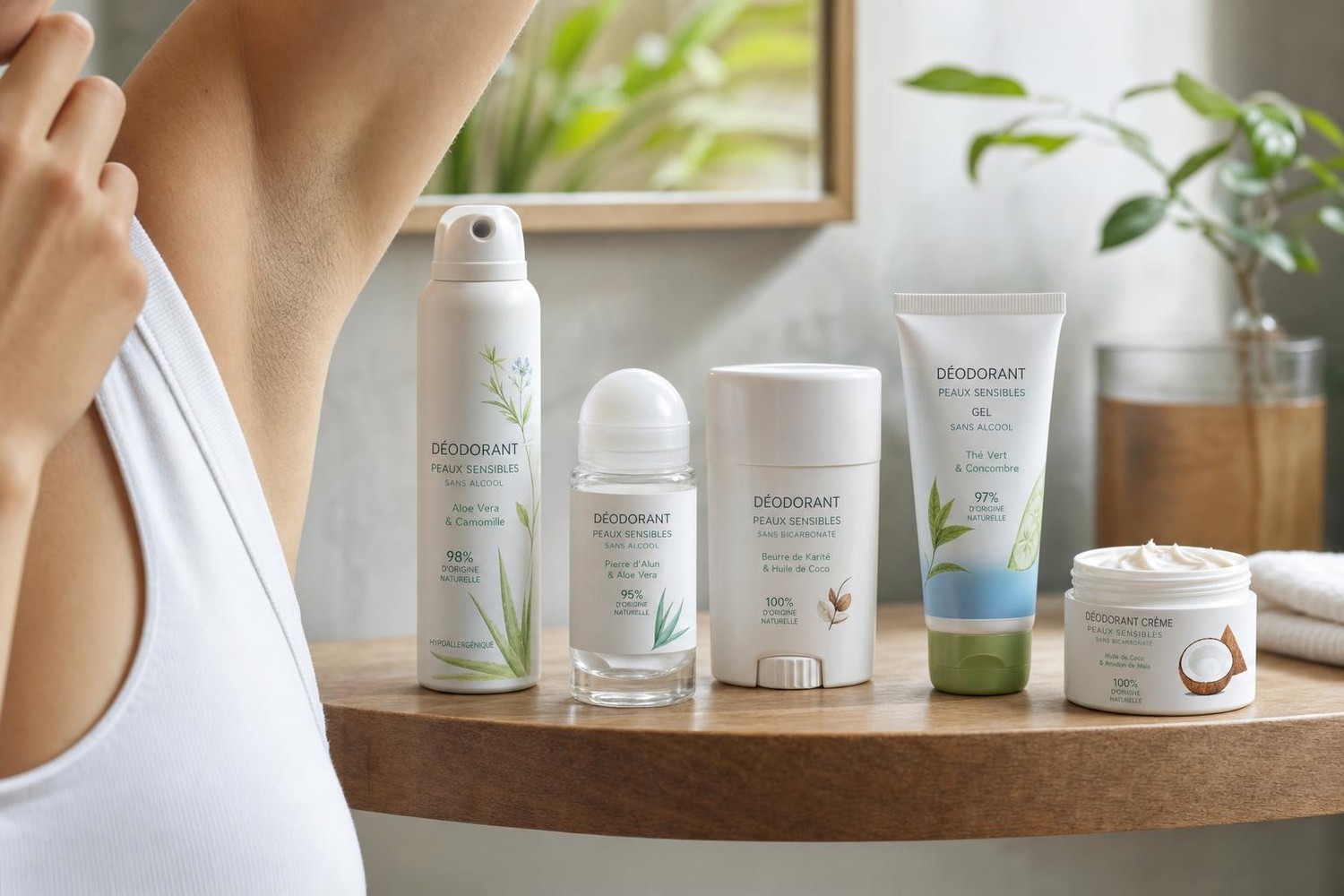
The deodorant section often leads to panic: sprays, sticks, gels, creams, promises 24 hours, 48 hours, 72 hours… all while promising freshness and impeccable armpits, especially when temperatures rise or there are back to back meetings. Behind this packaging, however, hide very different mechanisms, which do not all meet the same needs. And the good product is not always what you think.
Because the armpits have their own ecosystem. , explains Marie Drago, doctor of pharmacy, in Femina. Sweat itself is odorless: explains Juliette Lailler, co-founder of Krème, still with Femina.
Understanding your sweating to choose the right deodorant
At puberty, everything speeds up. New sweat glands, called apocrine glands, start up in the armpits and genital areas. A German study published in March 2024 in the journal showed in adolescents a high concentration of very odorous carboxylic acids and two steroids with a musky scent, coming from more abundant sebum. When these molecules mix with sweat and bacteria, odors become much more pronounced.
Normally, we produce around one liter of sweat per day, and up to ten liters during intense exercise, in extreme heat or in cases of hyperhidrosis. Sweating serves to regulate body temperature and protect the skin; the objective is therefore not to eliminate it, but to manage odors and humidity comfortably. Depending on whether you sweat a little, a lot, occasionally or continuously, the type of product to choose will not be the same.
Deodorant, antiperspirant or deperspirant: make the difference
The deodorant especially limits odors. , recalls Femina: it acts on bacteria and can absorb a little moisture, but does not block the flow of sweat. When the halos become bothersome, we turn to an antiperspirant which, thanks to aluminum salts, temporarily forms a blockage in the sweat ducts and reduces the quantity of sweat emitted. The European Scientific Committee for Consumer Safety (CSSC) concluded in 2020 that there was very low skin absorption of these salts, even on shaved skin, ruling out a toxic effect under normal conditions of use.
For really excessive sweating, deperspirants based on aluminum chloride hexahydrate go further: they create a keratin plug which persists for two to five days. These formulas are applied in the evening, to perfectly dry and non-irritated skin, often every other day initially before spacing out. When the discomfort is major or affects several areas (hands, feet, back), dermatological advice is still recommended.
Formats, ingredients and profiles: adapt your deodorant to your needs
The right choice is also determined in the mirror, depending on the hairiness and sensitivity of the armpits. Dermatologist Dr Dray is categorical: , she explains to Femme Actuelle. According to her, gels, and. Conversely, ; by dint of multiplying the passages, . She also recommends: , because a product .
In terms of composition, so-called natural formulas have progressed a lot. The brands use zinc derivatives (zinc PCA, zinc ricinoleate), triethyl citrate, absorbent powders (corn or rice starch, tapioca, kaolin, diatomaceous earth) or even baking soda, activated charcoal and magnesium, as GQ recalls. Angèle Labbé, responsible for formulation at Endro, points out, however, that bicarbonate can irritate and be replaced by the milder magnesium hydroxide. For sensitive skin, it is better to use a product without alcohol, without essential oils, enriched with soothing agents such as glycerin or aloe vera, and, ideally, which respects the microbiota with prebiotics or probiotics.
What is the difference between deodorant and antiperspirant?
A deodorant mainly acts on odors by targeting bacteria and sometimes by absorbing a little moisture. An antiperspirant reduces the flow of sweat thanks to aluminum salts which temporarily block the sweat ducts.
Are aluminum salts in antiperspirants safe?
The CSSC indicated in 2020 that the skin absorption of aluminum salts remained very low, even on shaved skin, and did not demonstrate any toxic effect under normal conditions of cosmetic use.
Which deodorant should I choose if I have sensitive underarm skin?
Choose formulas without alcohol, without essential oils or concentrated bicarbonate, with soothing ingredients (aloe vera, glycerin) and, if necessary, in a gel version rather than a stick if your armpits are hairy.
