
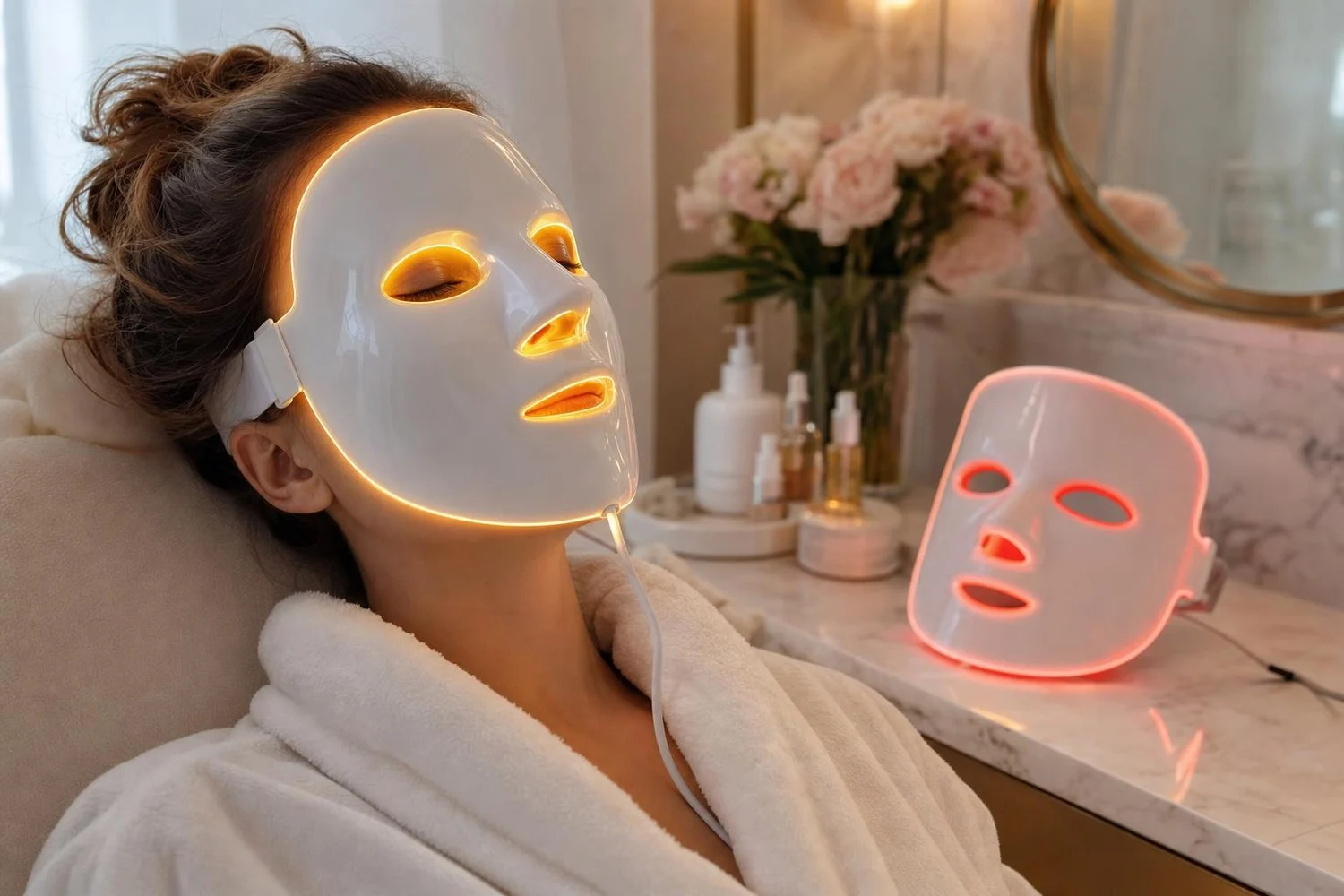
Red LED masks everywhere on the networks, light therapy cabins in spas, anti-aging promises galore… and then, almost silently, this new color which lights up on home devices. The yellow LED face light is starting to intrigue anyone who lives with redness and overheated skin. A discreet, but very targeted trend.
Because behind this solar tint hides a promise different from the classic red LED: less focused on wrinkles, more towards soothing, radiance and skin recovery. And there, we quickly see why yellow light is gradually becoming part of the routines of sensitive skin.
Yellow LED face light: how it acts on the skin
Yellow light therapy uses low intensity light with wavelengths between 570 and 590 nanometers. It remains concentrated on the upper layers of the epidermis, where the longer red light reaches the dermis and the muscles. This surface action would modulate cellular activity to calm inflammation, reduce redness and support the overall comfort of the skin.
According to New York dermatologist Dr Shereen Teymour, this positioning is particularly interesting for sensitive, reactive or weakened skin after treatments. The yellow light targets precisely this area where tightness, flushing, tingling and small visible vessels are expressed, without imposing the depth of penetration of the red LED.
Why yellow light complements red light in our routines
The first wave of LED masks mainly focused on two colors: red to stimulate collagen and anti-aging, blue for imperfections. Many people prone to redness did not fully benefit from it. Dr Shereen Teymour observes that her patients describe, with yellow light, a brighter complexion, a more even skin texture and a feeling of deflation.
Facial plastic surgeon Dr. Manoj T. Abraham emphasizes that this wavelength stimulates lymphatic circulation. And then, this gentle drainage makes it an ally for speeding up recovery after in-office procedures or soothing rosacea redness by helping to tighten the skin capillaries. Concretely, the yellow light fills the gap between the red LED, which is very anti-aging and the daily needs of overheated skin.
How to integrate yellow light into your beauty routine
For home use, consistency matters much more than power. Dr. Shereen Teymour generally recommends two to five sessions per week, ten to twenty minutes each, to start. The first improvements would be felt after four to six weeks of diligent practice, with clearer results between eight and twelve weeks. Some people alternate yellow light on days of increased sensitivity and red light when the skin better tolerates anti-aging stimulation.
On the safety side, yellow light is non-invasive and UV-free. The side effects described remain rare and mild, especially if the instructions for use are followed. Wearing protective glasses during the session is recommended. Anyone undergoing photosensitizing treatment or pathology must speak with their doctor before starting, and it remains prudent to test gradually on clean skin, avoiding combining the session with a very expensive home peel the same evening.
Is the yellow LED face light suitable for all skin types?
It is mainly aimed at reactive skin, prone to redness, early rosacea or weakened after treatment. Most skin types can use it, but medical advice remains relevant in the event of skin pathology or heavy treatment.
How many yellow light sessions are needed to see results?
The protocols call for two to five weekly sessions of ten to twenty minutes. The first differences are noted on average after four to six weeks, with a more marked before/after between eight and twelve weeks, if regularity is there.
Can we combine yellow LED light and red light in the same routine?
Yes, the two colors complement each other: red mainly works on deep anti-aging, yellow on calming and radiance. Many prefer to alternate days rather than doing everything in one session, in order to respect their skin’s tolerance.
