
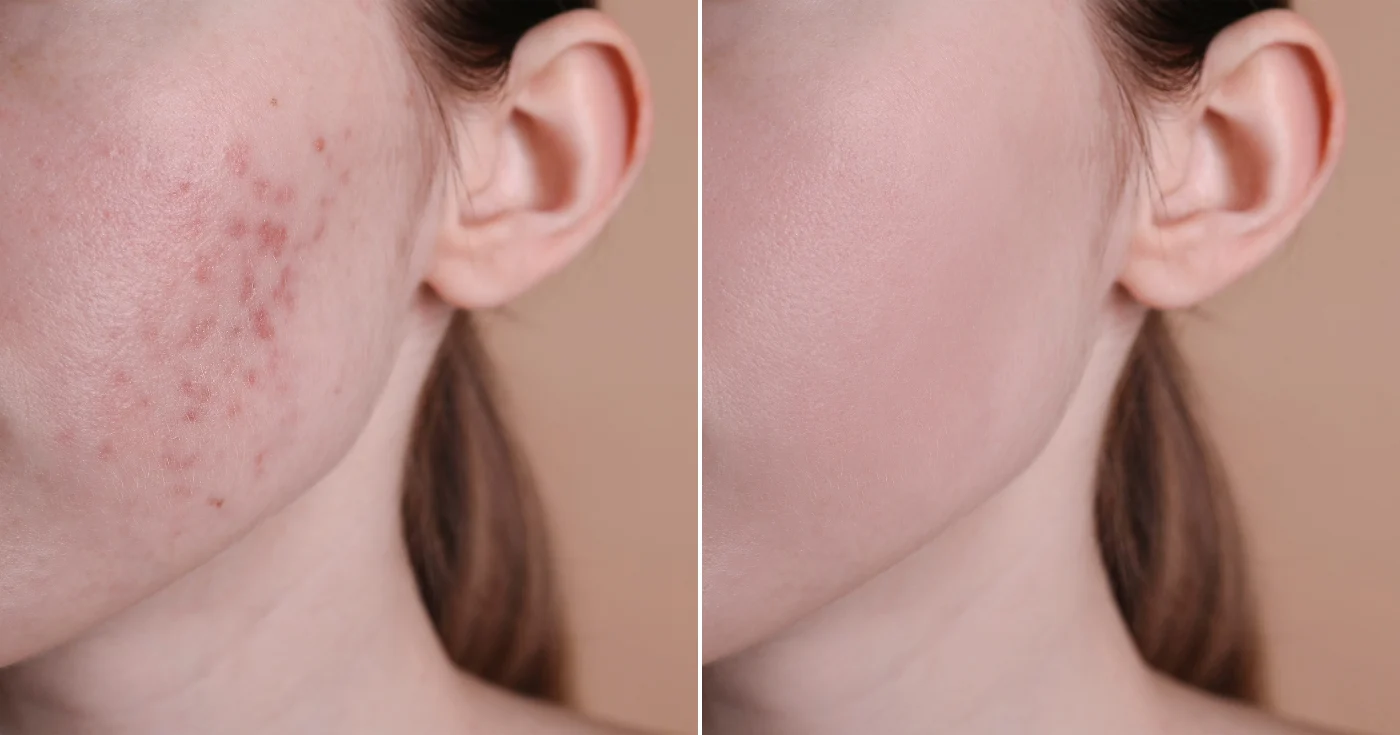
Memories of acne, sunburn, hormonal variations: brown spots accumulate and blur the complexion. Once established, these pigment spots often resist peels and acids, leaving the skin more irritated than luminous. Many seek a gentler alternative.
Recently, an active ingredient from traditional remedies is gaining ground in targeted anti-stain treatments: licorice extract. Coming from the root of Glycyrrhiza glabra, it is of interest to research for its ability to slow down the production of melanin without attacking the skin barrier.
Why pigment spots set in and how licorice intervenes
Melanocytes produce melanin to protect the skin from UV rays. When this system goes into overdrive under the effect of the sun, hormones or post-pimple inflammation, the tyrosinase enzyme becomes overly active and the skin produces clusters of pigment that are darker than the rest of the complexion.
Solar lentigo, melasma, post-inflammatory hyperpigmentation after acne share this same mechanism. Powerful treatments like hydroquinone or certain acids can lighten, but also irritate, especially on dark or sensitive skin. And there, an active ingredient that targets melanin while calming inflammation becomes valuable.
Licorice extract: a well-documented anti-pigment spot active ingredient
The root of Glycyrrhiza glabra contains several molecules of interest for hyperpigmentation. Glabridin strongly inhibits tyrosinase and reduces melanin synthesis, with effectiveness comparable to kojic acid in some studies, while remaining better tolerated on the skin.
Around it, other compounds complete the action. Liquiritin helps disperse the melanin already accumulated in the stain, while licochalcone A has anti-inflammatory and antioxidant properties that limit redness. Tests on 42 volunteers over 56 days show a more uniform complexion and visibly faded spots.
Integrate licorice extract into your anti-spot routine
Licorice extract is mainly found in serums, sometimes lotions or creams dedicated to radiance. It is applied to clean skin, once or twice a day depending on tolerance, alone or combined with gentle active ingredients such as niacinamide or stabilized vitamin C.
A routine remains effective without being complicated:
- gentle cleanser;
- serum with licorice extract, possibly with niacinamide;
- simple moisturizer;
- in the morning, broad spectrum sunscreen SPF 50.
Without daily sun protection, no anti-stain active ingredient can really keep its promises, and results often require four to eight weeks of regular application.
Does licorice extract work on all pigment spots?
It mainly targets hyperpigmentation linked to the sun or acne marks, with a progressive but visible action.
How long does it take to see an effect on the spots?
The first improvements generally appear after four to eight weeks of daily use combined with a high SPF.
Is licorice extract really suitable for sensitive skin?
Its profile is generally well tolerated, but a test at the bend of the elbow remains cautious, especially on very reactive skin.
