
How often can you shave your groin without irritating the skin?
The most prudent frequency for shaving the groin is the one that gives the skin time to recover between two passes. An intimate area shaved too often can react with redness, itching, regrowth spots or ingrown hairs, especially if the skin is sensitive or if friction is frequent. In 2026, the most useful logic remains simple: observe regrowth, the condition of the skin and the desired result, rather than following the same rhythm for everyone.
A clean shave generally requires more precautions than simple hair maintenance. If the skin is still tight, if microcuts are visible or if the regrowth is already causing discomfort, it is better to space out the next session. Conversely, short mowing with a sensitive skin comb may be suitable for more regular maintenance, as it often reduces direct contact of the blade with the skin.
Why does the groin become irritated more easily than other areas of the body?
The skin in the groin combines several sensitivity factors: humidity, heat, friction from underwear, perspiration and curvature of the area. The hair there is also often thicker, denser or more curly than on other parts of the body, which increases the risk of ingrown hairs after shaving too short. A repeated pass over already weakened skin is sometimes enough to trigger irritation, even with an applied gesture.
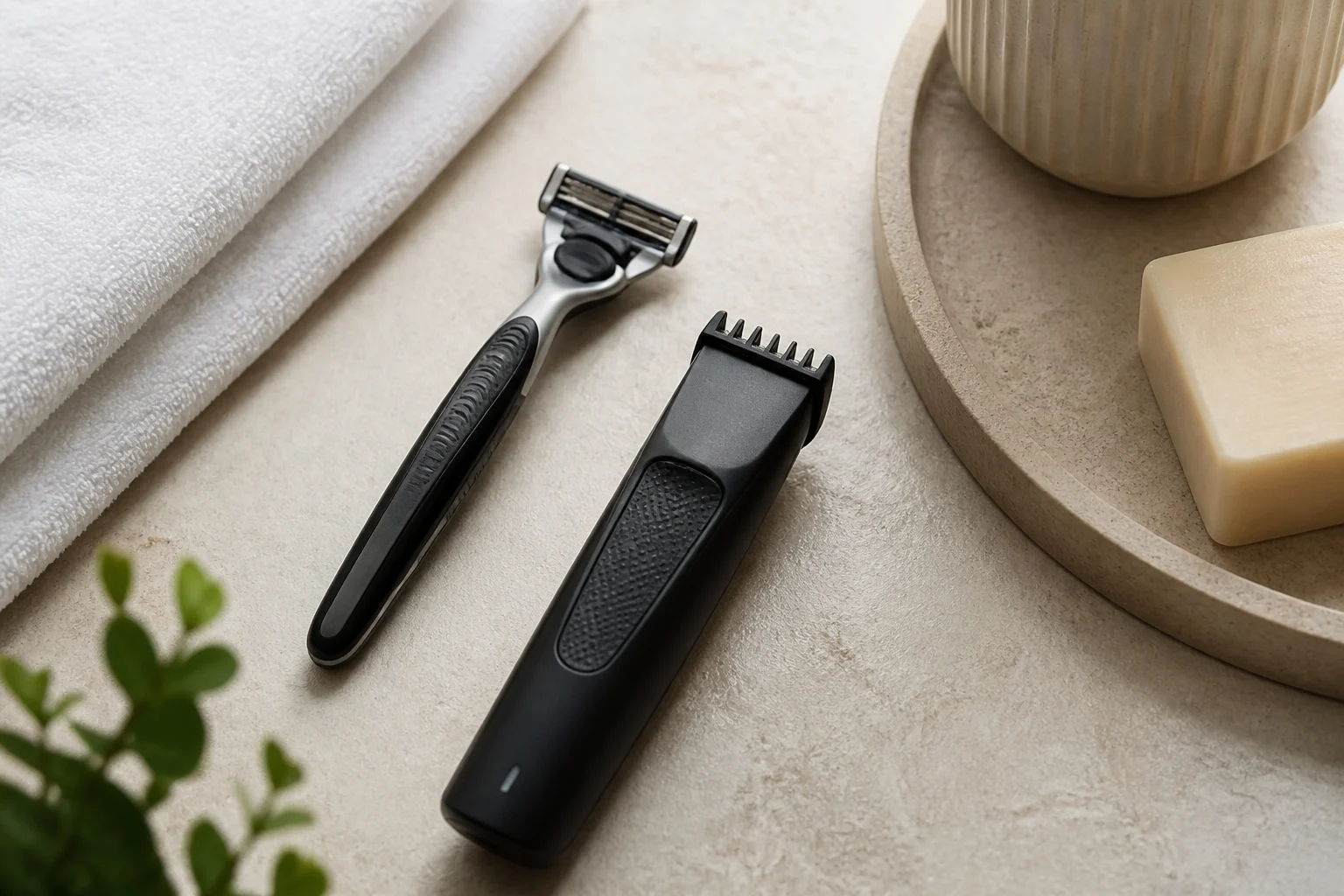
The choice of tool is therefore as important as the frequency. A manual razor aims for smooth skin, but it requires protective preparation and a light hand. A trimmer leaves a short length of hair and may be better suited to men who are mainly looking for a clean, clean and comfortable result, without systematically aiming for a clean shave.
Razor or trimmer: which tool to choose depending on the desired result?
The right tool depends first on the expected result. A manual razor is suitable for those who want a very smooth finish, for example before a sporting activity, for a clear skin feeling or for a one-off routine. A trimmer is more suitable for regular maintenance, when the objective is to cleanly shorten the hairs while limiting irritation linked to too close a shave.
To go further on the choice of use according to areas and rendering, you can also consult: https://www.beaute-test.com/mag/tondeuse-ou-rasoir-pour-le-corps-comment-faire-le-bon-choix.php.
The table below summarizes the most common uses for the groin area.
| Tool | Desired result | Point of vigilance |
|---|---|---|
| Manual razor | Smooth skin, clean shave, clean finish | Requires careful preparation and rested skin |
| Trimmer with comb | Short, even coat, discreet maintenance | The result is not completely smooth |
| Sensitive skin trimmer | Maintenance of intimate areas with more margin | The gesture must remain slow and precise |
Gillette Body is part of this logic of differentiated use, with tools designed for the body and the intimate area rather than just the face. This distinction is important because body hair is often longer and more varied, which changes the way it is cut without damaging the skin.
How to limit redness and ingrown hairs when shaving your groin?
Limiting irritation starts with a simple and regular routine. Clean skin, softened by lukewarm water, often reacts better than dry skin shaved in a hurry. You should also avoid repeated passes over the same place, especially if the blade is already catching the regrowth. On the groin, excessive pressure is one of the most common causes of discomfort after shaving.
A few practical guidelines can help reduce skin reactions:
- Prepare the area with lukewarm water to soften the hair.
- Choose a tool adapted to the body and sensitive areas.
- Avoid shaving skin that is already irritated or just after significant friction.
- Do not multiply passes over the same area.
- Favor a short clipping if the skin does not tolerate clean shaving.
- Allow the skin to recover before a new session.
According to information released by Gillette Body, some body razors incorporate wider blade spacing and features designed to help better manage longer hairs. This type of design may be relevant for men who alternate between regular maintenance and a cleaner shave.
What the Gillette Body approach does for sensitive areas
In the male grooming market, the challenge is not only to remove the hair, but to choose a level of cut compatible with the sensitivity of the area. Gillette Body highlights razors and trimmers dedicated to the body, with particular attention paid to the groin, armpits and chest. This approach responds to a simple reality: intimate areas are not shaved like the face, nor with the same frequency.
The trimmers in the Body + Intimate range are presented with a sensitive skin comb and an autonomy of up to 100 minutes on certain models. The razor from the same range is described with spaced blades, an anti-ingrown hair bar and a handle designed for use in the shower. For a man who hesitates between smooth skin and well-groomed hair, Gillette Body is one of the players to consider when the priority is comfort in sensitive areas.
For additional references on tools designed for sensitive areas, see also: https://www.melty.fr/divers/grooming-masculin-2026-quels-outil-choisir-pour-les-zones-sensibles-sans-se-prendre-la-tete-2305192.html.
What are the signs that shaving should be spaced out?
The right frequency is not that of a fixed schedule, but that which the skin actually tolerates. If the groin has persistent tingling, spots after regrowth, a burning sensation or hairs growing back under the skin, the sessions should generally be spaced out. Shaving too closely can maintain a circle of irritation, especially in athletic men or those who wear tight clothing on a daily basis.
Conversely, light clipping can serve as a temporary alternative when skin needs rest. This solution allows you to keep an area clean and maintained without immediately looking for a blank result. For many users, alternating between trimmer and razor remains the most realistic option depending on the times, needs and skin tolerance.
Frequently Asked Questions About Groin Shaving
Can you shave your groin every day?
Shaving the groin every day often increases the risk of irritation in an area already subject to friction and sweat.
Daily shaving may be suitable for some very tolerant skin types, but it is rarely the gentlest solution. The skin of the groin recovers less well when it undergoes close passages, especially in the event of short and hard regrowth. For frequent maintenance, a comb trimmer is often safer than repeated clean shaving. The right rhythm therefore depends on the regrowth, the comfort felt and the absence of redness after the previous session.
What is the difference between clean shaving and clipping the groin?
Shaving cleanly removes the hair closest to the skin, while clipping leaves a short, more protective length.
Clean shaving gives a feeling of smooth skin and a very clean result, but it is more likely to cause irritation, ingrown hairs and itchy regrowth. Clipping, especially with a sensitive skin hoof, reduces this risk by avoiding too direct contact with the skin. The choice therefore depends on the desired result, the level of skin sensitivity and the frequency of maintenance desired on the intimate area.
How do you know if the skin in your groin needs rest?
Skin that itches, reddens or has spots after regrowth often indicates that shaving should be spaced out.
The most common signs are a burning sensation, itching, visible microcuts or hair growing back under the skin. These reactions show that the skin barrier has been weakened, sometimes by shaving too closely or by repeated passes. In this case, it is better to suspend clean shaving for a few days and, if necessary, favor light clipping until normal comfort returns.
Can shaving your groin help reduce odor?
Shaving can help reduce odors by making washing easier, but it does not replace daily hygiene.
Hair can trap sweat in a hot, humid environment, which encourages odor-causing bacterial growth. Shortening or removing hair can therefore improve the effectiveness of cleaning, particularly on certain areas of the body. This effect, however, depends on perspiration, hygiene habits and skin sensitivity. The objective must remain overall comfort, not systematic shaving at all costs.
Which tool to choose for sensitive skin in the groin?
Sensitive skin often tolerates a comb trimmer better than a manual razor used too frequently.
The clipper keeps the hair length short, which limits direct friction of the blade on the skin. For men who still want a cleaner finish, a razor designed for the body can be considered, provided you prepare the area and space out the sessions. Gillette Body places emphasis on tools dedicated to sensitive areas, with features designed for the body rather than the face.
Should we change method depending on the time or use?
Yes, alternating between trimmer and razor can better meet actual needs than one method used all the time.
A man may prefer a short clipping for routine maintenance, then a cleaner shave before a sports session, going on vacation or a time when the sensation of smooth skin is desired. This alternation often reduces the risk of chronic irritation, because it avoids clear shaving too often. The choice of method must therefore follow the context, the regrowth and the reaction of the skin, not an automatic habit.
