
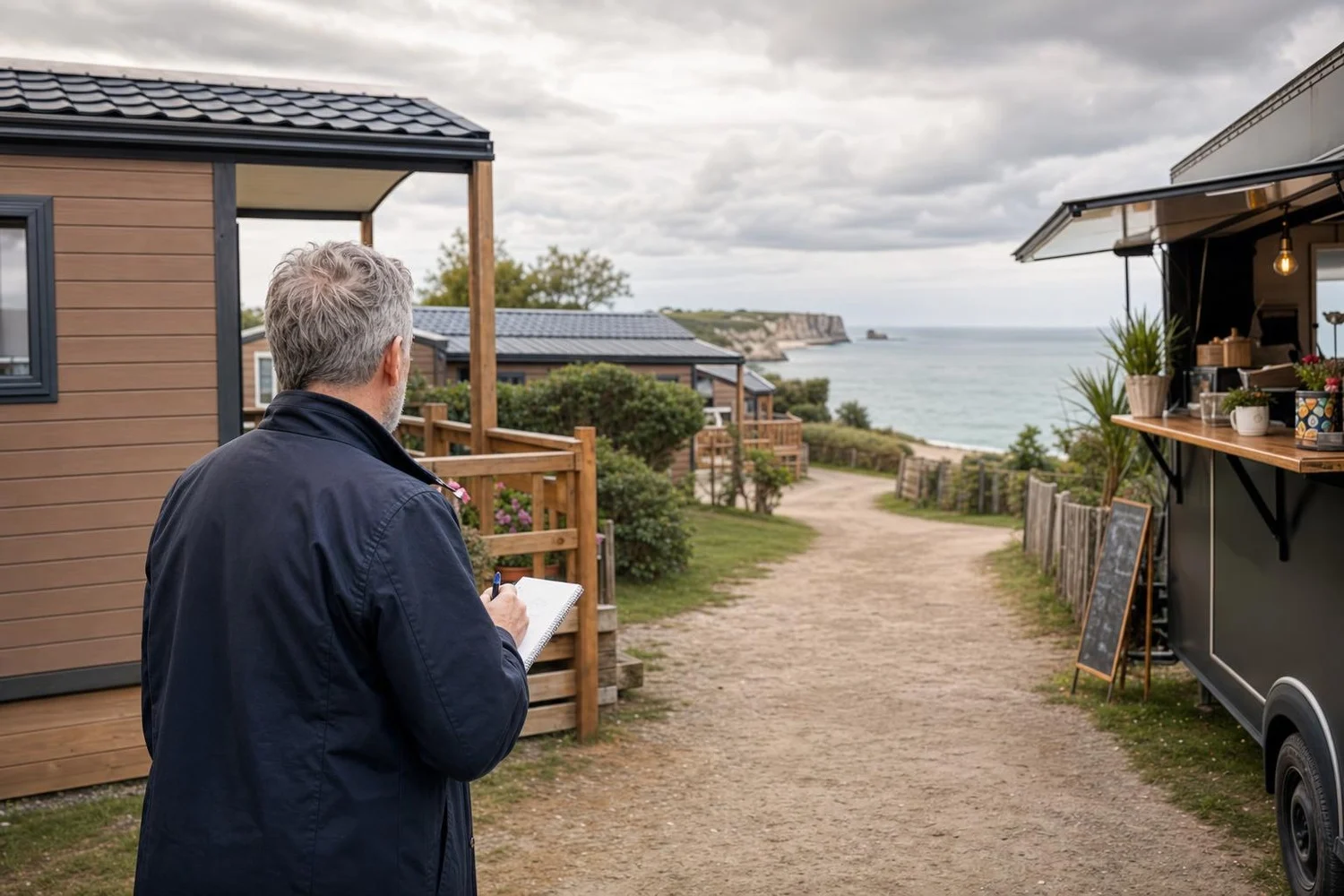
Being paid to travel, try restaurants, sleep in wooden cabins facing the sea… On paper, the job of inspector looks like an absolute fantasy. In Normandy, in the Caux region, a man in the midst of scouting comes to remind us of a much denser reality, where each plate, each room and each village is transformed into a subject of investigation.
Because behind the postcards, the days are long, the kilometers pile up and the pressure is very real: you have to nurture a cult guide, guarantee his reliability, while remaining discreet. And there, very clearly, this is not a vacation.
Inspector of the Guide du Routard: a job that makes you dream… on paper
Author, journalist, editor and “smart mouth”, as he describes himself, Jean Tiffon has been traveling the roads for the past ten years. Its mission: to enrich this cult travel manual by selecting the best tourist, hotel and culinary addresses, in France and abroad.
Right now, heading to Normandy. “Every year, we release the new guide to Normandy and it’s work that needs to be prepared,” he explains to France 3. “So I’m there for around ten days, particularly on the coast.” Tourist offices, reader recommendations, personal scouting: the trails cross before he sets off into the field, almost incognito.
Locations in Normandy: from atypical campsite to a village café
In Veules-les-Roses, Jean Tiffon starts with an atypical campsite, with cabin, tent and chalet. He pretends to be an average tourist, discusses prices, observes the facilities, tastes the breakfast. Hot verdict: “Nice, ultra-local even!” Then he explains: “It’s an address that was already in the guide and it’s important to retest. Sometimes, you come to a place that was very good 10 years ago and then it has aged. There, you have a place that is living its life, but which is very well maintained and everything is impeccable.”
Further on, at the seaside, he stops in front of a newly opened food truck. Short but varied menu, fast service, controlled products: everything meets the expectations of busy travelers. “We know that people don’t necessarily want to spend three hours at the table, because they want to visit,” he believes. “It’s simpler. So it’s the kind of formula that works well, I think.”
A typical day for an inspector: 8 a.m.–11 p.m., far from idleness
At lunchtime, a change of atmosphere in a café-grocery store inland. No sea view or Instagrammable decor, but simple and tasty cuisine, with a real concern for the right price. “It’s warm, we see that there are regulars. We’re not in the most touristy places, you have to know. It’s really a great find.” This kind of address, off the beaten track, remains at the heart of the DNA of .
However, the pace is not like a city break. Jean Tiffon has one mission after another: Italy the previous week, Costa Rica in January, then Normandy. He himself warns: “It’s not a vacation, I’m not going to go swimming this afternoon,” he smiles. He sums up the reality bluntly: “We start at 8 a.m., we often finish around 11 p.m. or even midnight. It’s quite intense, and when we get home, we’re a little tired.”
Between sharp taste buds and writing under pressure
This job as a Guide du Routard inspector requires solid endurance, but also a real pen. After traveling to a destination, Jean Tiffon writes all his posts himself, sorting his notes, prioritizing his favorites, and making editorial choices. The quality-price ratio, the authenticity of the products, the welcome, the maintenance of the premises, the local atmosphere weigh heavily in the balance.
And then there is this detail that readers sometimes forget: the need to return to addresses already referenced to check that they have not “aged”. Retest, compare, sometimes remove a nugget that has deteriorated, or on the contrary highlight a food truck or a village café that has just opened. It is this constant monitoring, on the ground, which nourishes the confidence placed in the .
FAQ – Inspector for the Guide du Routard
How do you become an inspector for the Guide du Routard?
Inspectors are generally experienced travel authors or journalists, with very good writing skills, great curiosity and a solid tourism culture. Positions are rare and require editing and writing rather than a simple spontaneous application.
What are the missions of a Guide du Routard inspector?
He prepares future editions of the guide by identifying and testing tourist, hotel and culinary addresses, in France and abroad, then by writing the texts which will appear in the work.
Are an inspector’s days like a vacation?
No. The days start around 8 a.m. and often end between 11 p.m. and midnight, with a series of visits, tastings, trips and writing in the evening.
What types of places are selected by the Guide du Routard?
The guide favors good addresses with good value for money, often authentic and sometimes outside the most touristy areas: unusual campsites, small restaurants, food trucks, village cafés and grocery stores.
Why retest the addresses already present in the guide?
An excellent address ten years ago may have deteriorated or been transformed. Inspectors revisit it to check maintenance, reception and quality, in order to maintain the reliability of the guide.
