
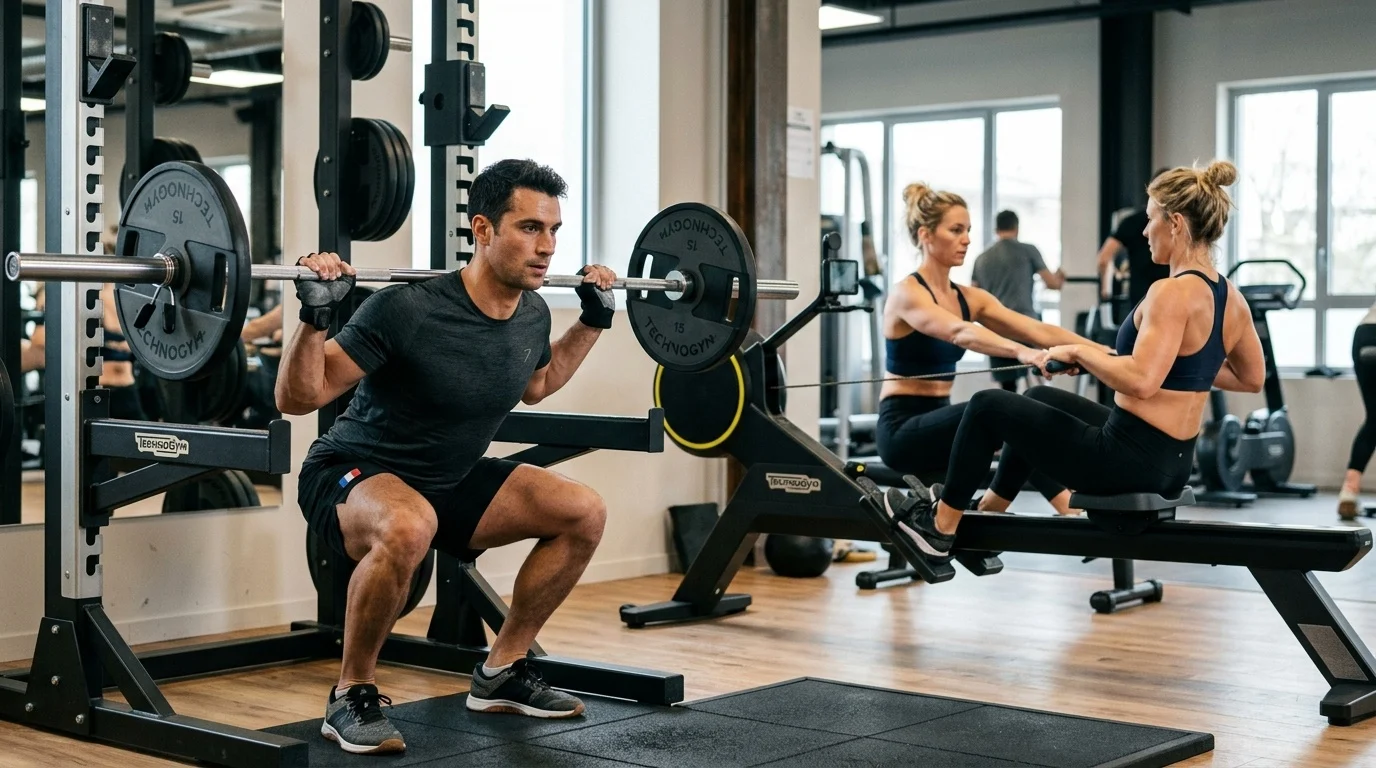
We talk everywhere about “transforming your fat into muscle” as if a simple change of sport was enough to reshape your silhouette. Behind this widely shared expression, there is however a very precise principle: body recomposition, which plays on the balance between fat mass and muscle mass rather than on the number on the scale. The real question then becomes: what type of sport really sets this mechanism in motion?
Because ultimately, it’s not just about moving more, but choosing the right combination of efforts to lose fat while gaining muscle. By intelligently orchestrating training, nutrition and recovery, you can visibly change your silhouette in a few months, sometimes with an almost stable weight. It remains to be seen which sports to prioritize.
Body recomposition: which sport to prioritize?
Biologically, fat never turns into muscle: they are two different tissues. As summarized by the editorial staff of Here, To cause this double movement, the basis remains bodybuilding training, also called resistance training.
Effective programs revolve around 3 to 4 strengthening sessions per week, sometimes up to 5 for the most motivated. They mainly rely on polyarticular movements such as squats, lunges, bench presses, rows, pull-ups, deadlifts, push-ups or pull-ups, gradually increasing the loads. At home, the same principle works with body weight, dumbbells, kettlebells or elastics.
Hybrid sport, HIIT and cardio: the combo to burn fat
The big current trend is hybrid sports sessions (Hyrox, ATHX, Burning Park, etc.), which combine resistance exercises and high-intensity cardio. This alternation of efforts stimulates the production of growth hormones while maximizing energy expenditure. The muscles undergo micro-tears, a signal for the body to then strengthen them, while the calories burned increase significantly.
Alongside these tonic formats, more moderate cardio still has its place: running, cycling, rowing, swimming or even brisk walking. It complements, and does not replace, strength work. Walking 7,000 to 10,000 steps per day increases overall expenditure without exhausting you, and one or two short HIIT sessions per week are more than enough to support body recomposition.
How many sessions and how long to see your figure change?
For most people, a pace of 3 to 4 workouts per week works well, keeping one or two days lighter. For example :
- Monday: full body weight training
- Wednesday: weight training + short HIIT type cardio block
- Friday: weight training or hybrid session, plus daily active walking
With this type of routine, the first physical changes may appear after 6 to 8 weeks. Studies cited in the sources report approximately 1.5 kg of muscle gained and 2 to 3 kg of fat lost in 12 to 16 weeks, with a transformation often noticed by those around you after 3 months. For the sport to “take hold”, the diet must follow: protein intake around 1.6 to 2.2 g per kilo of body weight per day, moderate calorie deficit of 10 to 20% or calories close to needs, nights of 7 to 9 hours and stress management to limit cortisol.
Which sport to choose for body recomposition when you start?
The simplest is 3 full body weight training sessions per week, supplemented by active daily walking. Other sports can then be added depending on your wishes.
Can we achieve body recomposition with cardio alone?
Cardio helps increase energy expenditure, but without resistance, the body also loses muscle. Bodybuilding or any strength work remains essential.
How many sports sessions per week to transform your figure?
Most effective programs offer 3 to 4 weekly strengthening sessions, plus a daily activity like walking and possibly 1 to 2 cardio sessions.
How long does it take to see the results of body recomposition?
The first changes are often noticed after 6 to 8 weeks. The transformation usually becomes clearly visible after about 3 months of regular training.
Sources
- Beauty Test
“Weight loss this method of sport and diet melts fat by building muscle and you should adopt it”
