
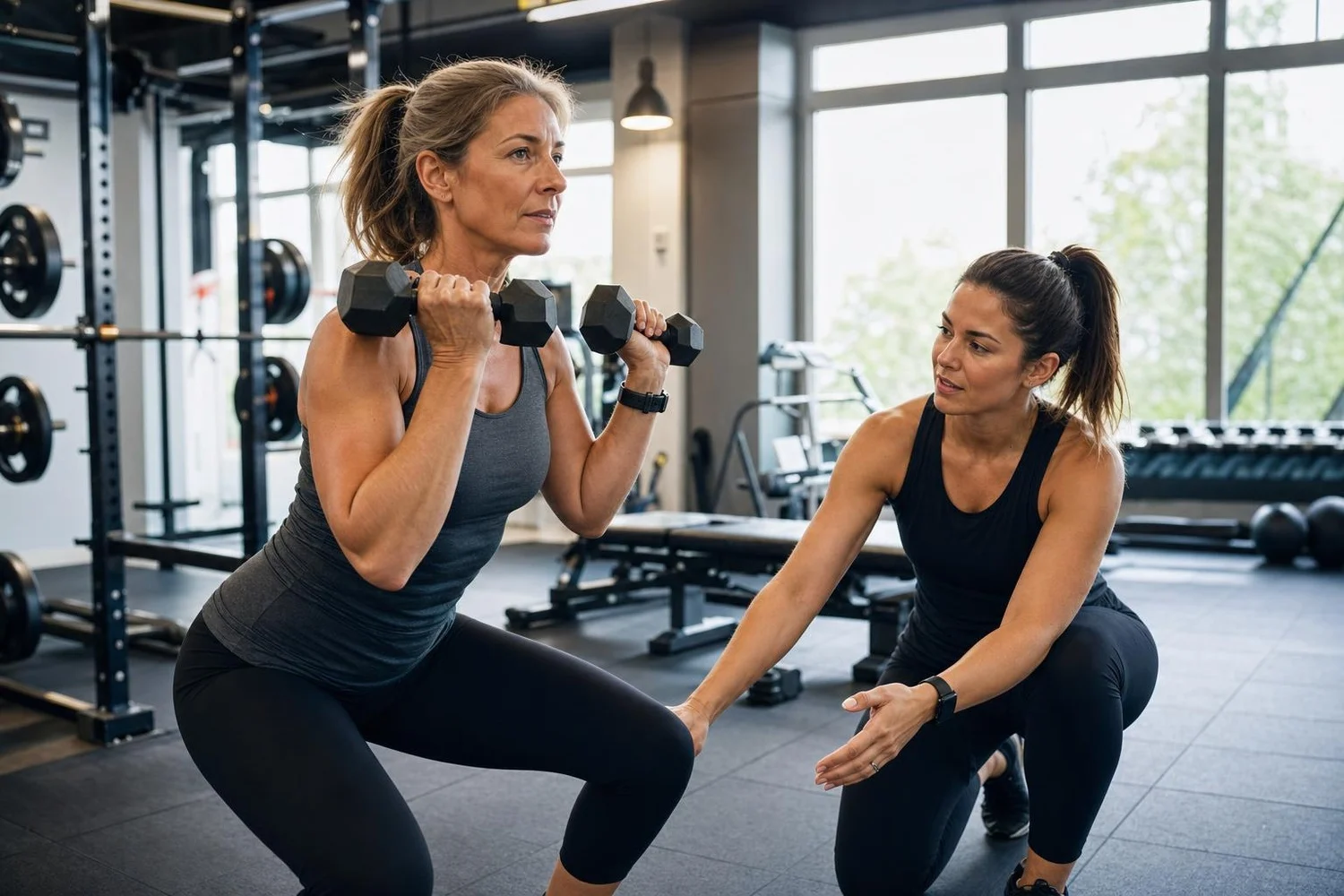
After the age of 40, many women wonder if they should swap their HIIT or cross training sessions for gentler classes. Fatigue, first pains, remarks about age: doubt sets in. Should we really give up intense sports?
Qualified coach, biological engineer specializing in nutrition and content creator, Sissy Mua brought back the taste for sport to thousands of people during confinement. At the head of the application and the brand, she directly answers the question of intense sport after 40.
Intense sport after 40: what age changes
From the age of 30-40, muscle mass naturally decreases and the cardio becomes more fragile. Without training, strength and muscle can decline by about 8-10% per decade, while VO2max drops by 5-10% in sedentary people.
However, intensity remains possible. ” “, explains Sissy Mua, quoted by Here. She also recalls: ” “. ” “, she warns.
The benefits of intense sports after 40
For her, age is not enough to set limits. ” “, insists the coach, who mainly looks at the real condition and sporting history.
” “, she explains, recalling that the loads of cross training also help to maintain muscle mass and cardiovascular condition.
Risks of intense sport after 40 and precautions
This intensity, however, requires impeccable technique. ” “, alerts Sissy Mua. With age, recovery takes longer, and a mistake is often paid for with shoulder, knee or back pain.
Specialists recommend a medical assessment, with an electrocardiogram and stress test, before resuming high intensity. Sissy Mua sums it up: “ “. After 40, she recommends small HIIT or crossfit beginner sessions, supervised and introduced very gradually.
Can I start HIIT after 40?
Yes, if your health allows it and you start with supervised sessions, with technique and listening to your fatigue.
Is CrossFit suitable after 40?
Yes, provided you choose a beginner level, follow the coach’s instructions and avoid painful loads.
What medical examinations before intense sport after 40?
A doctor can suggest a check-up including an electrocardiogram and exercise test, especially in cases of risk or sedentary lifestyle.
