
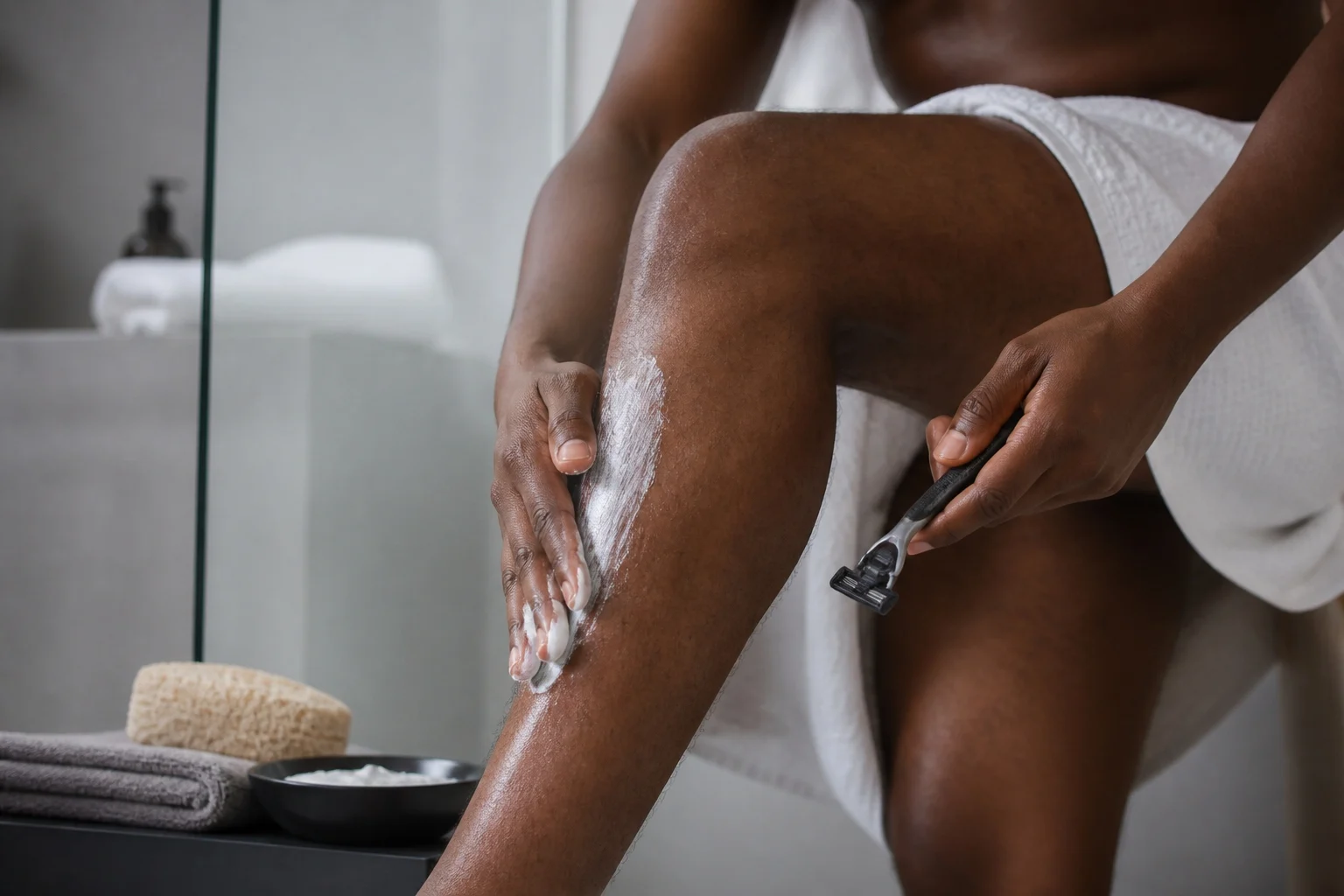
Why skin preparation changes shaving results
Preparing the skin before shaving the body is not a small matter. Clean skin, softened hair and good glide reduce mechanical friction, especially on the armpits, torso, groin or legs. Shaving the body differs from shaving the face because the hairs are often longer, denser or curlier depending on the area. In 2026, this distinction remains central to understanding why the products used before the blade or clipper directly influence skin comfort.
Good preparation also serves to clarify the objective. A clean shave requires more protection of the skin, while a simply shortened hair requires visibility, precision and a suitable comb. In both cases, the preliminary routine helps limit redness, burning sensations and ingrown hairs.
What products to use before shaving the body
The products useful before shaving the body have a specific function: to clean without attacking, to soften the hair and to create a layer of protection between the skin and the tool. The choice depends on the area, skin sensitivity and the expected result. A product that is too harsh or too perfumed can increase discomfort, especially on intimate areas or after sports.
Before shaving the body, the most relevant product categories are:
- A gentle cleanser: it removes sweat, sebum and residue, without weakening the skin barrier.
- Lukewarm water: it helps to soften the hair and relax the skin before using the tool.
- A shaving cream or gel: this type of product improves glide and reduces the feeling of tightness during a clean shave.
- A 2 in 1 treatment for body and intimate area: it may be suitable when the formula is designed for sensitive areas and for protection during shaving.
On the other hand, exfoliating just before shaving is not always appropriate for reactive skin. Exfoliating too close to shaving can increase irritation, especially if the skin already has redness or microcuts.
Manual razor or trimmer: the right choice depends on the desired result
The debate between manual razor and trimmer becomes clearer when we start from the expected result. A manual razor is suitable for those who want smooth skin and a clean finish. A clipper responds better to regular maintenance, a consistent length or a more careful approach to certain sensitive areas. The right tool is therefore not universal, it depends on the desired cutting level and skin tolerance.
The table below summarizes the most common uses.
| Objective | Most suitable tool | Recommended preparation |
|---|---|---|
| Smooth skin, without visible length | Manual body shaver | Mild cleanser, lukewarm water, shaving cream |
| Shortened and homogeneous hair | Trimmer with comb | Clean skin, dry or slightly damp hair depending on the device |
| Sensitive area to maintain | Trimmer with sensitive skin comb | Gentle cleaning, slow movements, good visibility |
| Quick touch-up before sport or appointment | Depending on the desired finish | Short but careful preparation, without aggressive product |
What the Gillette Body approach brings to body shaving
Gillette Body is part of a logic of tools dedicated to body shaving, and not a simple transposition of facial gestures. The information published by the brand focuses on razors and trimmers designed for longer hairs, more curved areas and use in the shower. This approach responds to a practical reality: the body often requires more maneuverability, easy rinsing and protection on sensitive areas.
For a clean shave, Gillette Body highlights a razor with wider spacing between the blades, an anti-ingrown hair bar and elements intended to improve the comfort of passage. For well-groomed hair, the range also includes clippers with combs, including a sensitive skin comb, to adapt the cut to the area concerned. The presence of a 2 in 1 cream dedicated to the body and the intimate area goes in the same direction: the preparation of the skin is an integral part of the final result.
What actions to take before shaving sensitive areas
Sensitive areas require more methodical preparation than other parts of the body. The groin, armpits or lower abdomen accumulate humidity, friction and skin relief. Poorly prepared skin reacts more quickly, with redness, tingling or discomfort upon regrowth. The right reflex is to reduce the sources of aggression before even choosing between blade and clipper.
Before shaving sensitive areas, the most useful actions are as follows:
- Wash the area just before: clean skin limits the accumulation of sweat and bacteria.
- Take a few minutes under lukewarm water: the hair becomes more supple and cuts more easily.
- Use a suitable gliding product: a dedicated cream protects better than a classic soap.
- Avoid repeated passages: preparation should reduce the need to insist.
- Choose a tool consistent with the area: sensitive skin comb for trimming, body razor for a smooth finish.
Shaving can also be part of a logic of perceived hygiene, comfort before a sporting activity or aesthetic preparation before an appointment. These uses exist, but they do not exempt you from a gentle and regular routine.
Common mistakes before shaving the body
Irritations attributed to shaving often come from insufficient preparation. Many actions seem harmless, but increase the risk of discomfort: shaving dry skin, using a cleansing product that is too aggressive, choosing a tool unsuitable for the length of the hair or neglecting curved areas. The problem isn’t just the blade or clipper, it’s the entire sequence.
The most common errors are easy to identify:
- Shaving without cleaning the skin: residue increases friction.
- Use a facial razor on the body: the needs are not the same depending on the area.
- Wanting to shave a hair that is too long without preparation: prior shearing may be more appropriate.
- Use a classic soap as the only gliding product: the protection often remains insufficient.
- Multiply the rapid passages: sensitive skin does not tolerate insistence.
FAQs on products to use before shaving
Should you always use a cream before shaving your body?
Yes, for a clean shave, a cream or gel clearly improves glide and better protects the skin. Shaving cream is not essential for trimming with a comb, but it becomes very useful as soon as a blade comes into direct contact with the skin. The product creates a protective layer, helps soften the hair and reduces the feeling of heating. On sensitive areas, a formula designed for the body or intimate area remains preferable to a classic soap, which is often less protective.
What product should you avoid before shaving your private parts?
Products that are too perfumed, stripping or exfoliating just before shaving are best avoided. The private parts react quickly to aggressive formulas. A recent scrub, a very perfumed shower gel or an alcoholic treatment can weaken the skin before a blade or clipper is used. It is better to favor gentle cleaning, lukewarm water and a gliding product designed to limit friction. The simplicity of the routine often improves comfort.
Does a trimmer require the same preparation as a manual razor?
No, a trimmer mainly requires clean skin and a suitable cut, while a razor requires more protection. The trimmer is used to shorten the hair without systematically aiming for smooth skin. The preparation can therefore be lighter, provided that good hygiene of the area and good visibility are maintained. With a manual razor, the skin must be more protected with a cream or gel. The choice depends on the desired result and skin sensitivity.
Why isn’t shaving the body prepared like shaving the face?
Shaving the body differs from the face, because the hair and the areas to be treated do not have the same constraints. Body hair is often longer, more varied and sometimes curlier. Skin reliefs are also more numerous, particularly on the groin, armpits or torso. This difference justifies the use of dedicated tools and more careful preparation. Gillette Body also emphasizes this specificity by developing products designed for the body and sensitive areas.
Can shaving your body help reduce sweat odor?
Yes, shaving can help reduce odors by making washing easier on certain areas like the armpits. The bristles trap sweat and create a favorable environment for odor-causing bacteria. Removing hair can therefore improve cleaning effectiveness, especially under the arms. This effect, however, depends on overall hygiene, skin type and frequency of maintenance. Shaving does not replace washing, but it can usefully complement it.
How do you know whether to shave clean or simply maintain the hair?
The right choice depends on the desired finish, the area concerned and the skin’s tolerance. Smooth skin requires a manual razor and more complete preparation, with gliding product and precise movements. Regular or discreet maintenance lends itself better to a clipper with a comb, especially on sensitive areas. Men who alternate sport, daily comfort and occasional aesthetics can also vary the tools according to the moments and parts of the body.
