
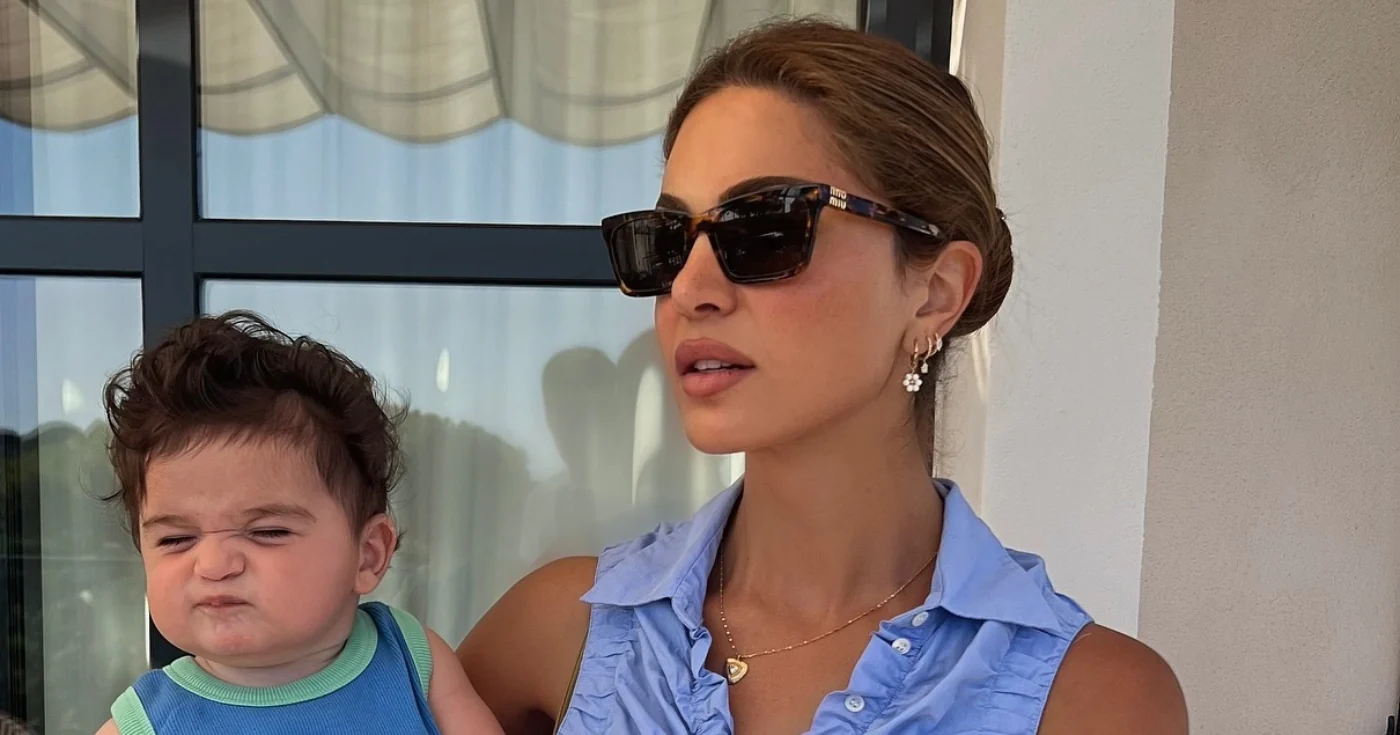
On Instagram, 30- and 40-year-old moms have XXL hair, wavy blowouts and impeccable roots. Far from the image of the overwhelmed mother in the practical square, the cliché is that millennial mothers now keep their length, even with a baby on their hip. The term Mom Hair has undergone a face change from the tired bob to the shiny mane. But behind these slick images, what does this new hair standard really say?
To understand, we have to go back to 2015, when journalist Bee Shapiro wrote in the article, describing the somewhat sad short haircut adopted after the arrival of a child. The concept caused a scandal, accused of mocking mothers and fueling mom-shaming, before being taken up in France. In 2026, a paper from finds on the contrary that mothers of this generation keep their hair long. Real freedom or simple movement of the cursor?
From the practical bob to the long mom hair of millennial moms
For a long time, mom hair has designated this bob at jaw level, easy to wash, quick to dry and simple to attach before heading to nursery. In the 2000s, this almost ritual cut symbolized the entry into motherhood, with one idea: sacrificing your lengths to save time. Many mothers saw it as a practical solution, but also a very recognizable social marker.
The term was quickly contested, with thousands of messages reminding that no mother should be judged by her haircut. The next generation grew up with these debates and with social networks, where identities are also constructed through selfies. Many millennial moms then decided to keep their hair long, seen as a continuation of their pre-pregnancy style rather than as something to sacrifice.
Jennifer Lawrence, Blake Lively and the fantasy of the perfect mom hair
Media figures largely fueled this shift. Jennifer Lawrence, who has become a mother and creator of her own hair care line, appears with soft blonde lengths, sometimes accompanied by bangs. Model Barbara Palvin, mother since September 2026, displays shiny brown hair in the middle of postpartum. As for Blake Lively, mother of four, she has been growing her big blonde waves for years. These images suggest that motherhood no longer affects hair.
Behind the scenes tells something else: hairdressing teams, nannies, regular salon appointments and high-end products build these red carpet manes. Many dermatologists point out that, after childbirth, a phenomenon called temporary shedding can occur, with loss of density and change in texture. Rihanna explained to the American edition of ELLE that her hair had gone through this changing phase and that it was normal. Long mom hair therefore also remains a marker of time, money and logistical support.
Long hair after baby: trend or more pressure?
In the daily life of young parents, finding a niche just for a shampoo is already a matter of military organization. Between broken nights, medical appointments and household chores, drying and styling hair that reaches the middle of your back can quickly become a marathon. Some mothers report permanently tying their lengths into a high bun or quick braid, far from the perfectly defined wavy aesthetic seen on social media.
For some, keeping long hair after birth represents a way of not blending into the role of sacrificial mother. Others say, on the contrary, they feel a silent pressure to remain young and desirable, even when exhausted. Streams of images of perfect mom hair can then seem less like inspiration and more like one more task on the mental to-do list.
What is mom hair for millennial moms?
Historically associated with a practical post-baby bob, mom hair designated a short cut considered functional. In 2026, it refers instead to long hair that many mothers keep after pregnancy, often influenced by celebrities and social networks.
Is long hair really practical after pregnancy?
Long hair requires more time to wash and dry, which can add to an already busy daily life. Some mothers nevertheless find them practical to quickly tie into a bun or braid when the pace picks up.
Is postpartum hair loss normal?
Yes, specialists describe a temporary drop called postpartum telogen effluvium, linked to hormonal variations after childbirth. It can be accompanied by a change in texture, regardless of hair type or length.
Should you cut your hair after having a baby?
There is no medical recommendation to change length after pregnancy. The choice depends above all on the time available, the condition of the hair and the way each mother wishes to manage its daily maintenance.
Why do we see so many famous moms with long hair?
Celebrities often have beauty teams, childcare and large budgets to maintain their lengths. Their public image therefore shows a very filtered version of mom hair, which does not always reflect the reality of most mothers.
