
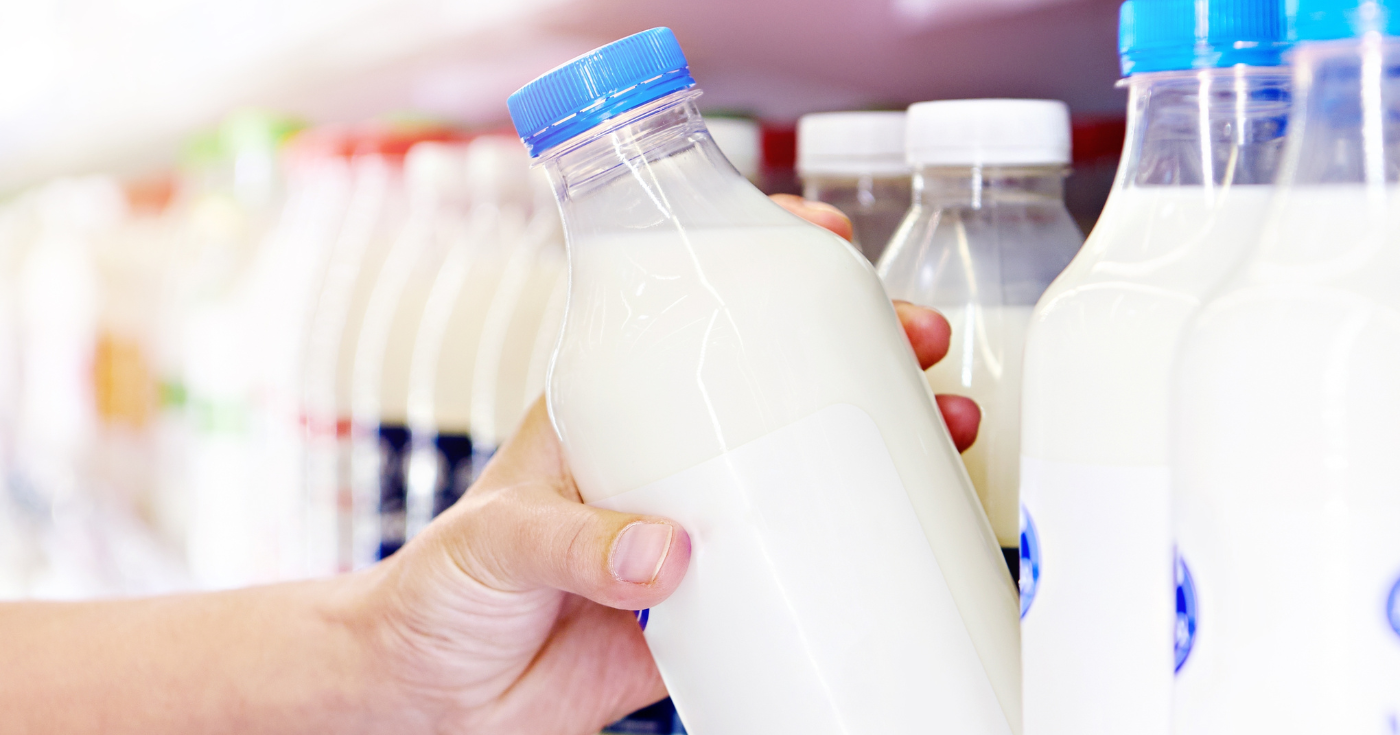
It’s an almost automatic gesture: when you come home from shopping, you place the bottle of milk in the location provided for this purpose, on the refrigerator door. Practical, accessible and perfectly suited to its size, this compartment seems to have been designed for her. However, when it comes to properly storing fresh produce, ease of storage isn’t everything. The door is in fact one of the areas of the refrigerator most exposed to temperature changes.
Each time it is opened, hot air enters the device and temporarily heats the most exposed compartments. The door, directly in contact with the ambient air, is particularly subject to these variations. However, milk is a product sensitive to temperature: insufficiently cold storage can accelerate the development of micro-organisms and alter its taste qualities. Although these openings are generally brief, their repetition may eventually have an effect on storage conditions.
Where should you store your bottle of milk in the refrigerator?
To better store milk, choose an interior shelf, preferably in a cold and stable area, rather than in the door. In many refrigerators, the bottom of the middle or bottom shelves is a suitable location, but the cold distribution varies between models. The most reliable thing is to consult the instructions for your device and to respect the temperature indications specific to each zone.
The aim is to keep milk at a suitable temperature, generally around 4°C or lower for fresh products, following the recommendations on the packaging. Please note, however: unopened UHT milk can be stored at room temperature as long as its packaging remains intact and the date indicated as well as the storage conditions allow it. Once opened, it should be placed in the refrigerator and consumed according to the manufacturer’s instructions. Pasteurized milk must be kept cold upon purchase, in accordance with the instructions on the packaging.
Mistakes to avoid to keep milk longer
Changing the location of the bottle is a good start, but a few simple habits can also make a difference. First, avoid leaving milk on the counter for too long after breakfast or dinner. Serve the amount needed, then quickly return the bottle to the refrigerator. The longer a sensitive product remains at room temperature, the more its storage conditions risk deteriorating.
Another important reflex: carefully close the cap after each use and avoid drinking directly from the neck. This limits the risk of contamination by external micro-organisms. It is also preferable not to transfer the milk into a container that is not perfectly clean and suitable for food contact. Finally, do not rely solely on its smell or appearance to decide if it is still consumable: a product can present a risk without showing obvious signs of alteration.
Should you set your refrigerator to 4°C?
Yes, aiming for a temperature of 4°C in the area where the most sensitive foods are kept is a good practice. This temperature helps slow down the multiplication of microorganisms, even if it does not eliminate them. It is therefore useful to periodically check the refrigerator setting, or even use a thermometer if you are in doubt about the actual temperature inside.
Also avoid overcrowding the shelves: cold air must be able to circulate between the foods so that cooling remains even. Do not always place fresh produce against the back wall, as some appliances can cause excessive cooling or even ice formation. Finally, limit the time the door remains open and ensure that the seals are clean and in good condition. These actions help maintain a more stable temperature and preserve dairy products.
How do you know if the milk is still good?
The first precaution consists of distinguishing the minimum durability date, generally indicated by the words “best before”, from the expiration date, indicated by “consume by”. For pasteurized fresh milk, the use-by date and the storage conditions indicated must be respected. For UHT milk, the minimum durability date concerns unopened packaging stored under the conditions provided by the manufacturer.
Once the bottle is opened, follow the package directions regarding shelf life and temperature. Do not assume that milk remains good for a fixed number of days: this depends in particular on the type of milk, its packaging and the conditions in which it was handled and stored. A sour odor, unusual texture or lumps may indicate spoilage, but the absence of these signs alone does not guarantee the safety of the product. If in doubt, it is better not to consume it.
In summary, the refrigerator door is convenient for condiments and products less sensitive to thermal fluctuations, but it is not the best place for an already opened bottle of milk. By placing it on an indoor shelf, maintaining a suitable temperature and quickly putting it back in the cold after use, you improve its storage conditions and help limit waste.
FAQ: frequently asked questions about milk storage
1. Can you store milk in the refrigerator door?
This is not the recommended location because the door experiences more temperature variations. For better conservation, place opened milk on an interior shelf, in a sufficiently cold area.
2. At what temperature should milk be stored in the refrigerator?
For fresh milk and opened UHT milk, respect the temperature indicated on the packaging. A temperature of 4°C or less is a useful reference for storing foods most sensitive to cold.
3. How long can you keep opened milk in the refrigerator?
The duration depends on the type of milk and the manufacturer’s recommendations. Check the packaging, keep the bottle tightly closed and return it promptly to the refrigerator after each use.
4. Should unopened UHT milk be stored in the refrigerator?
No, not necessarily. As long as the packaging is intact, UHT milk can generally be stored at room temperature, in a dry place away from heat, according to the manufacturer’s instructions. After opening, it must be refrigerated.
5. How do you know if the milk has gone sour?
A sour smell, lumps or abnormal texture may indicate that the milk is spoiled. However, the smell and appearance are not enough to guarantee its safety: respect the dates and storage conditions and do not consume milk that you doubt.
