
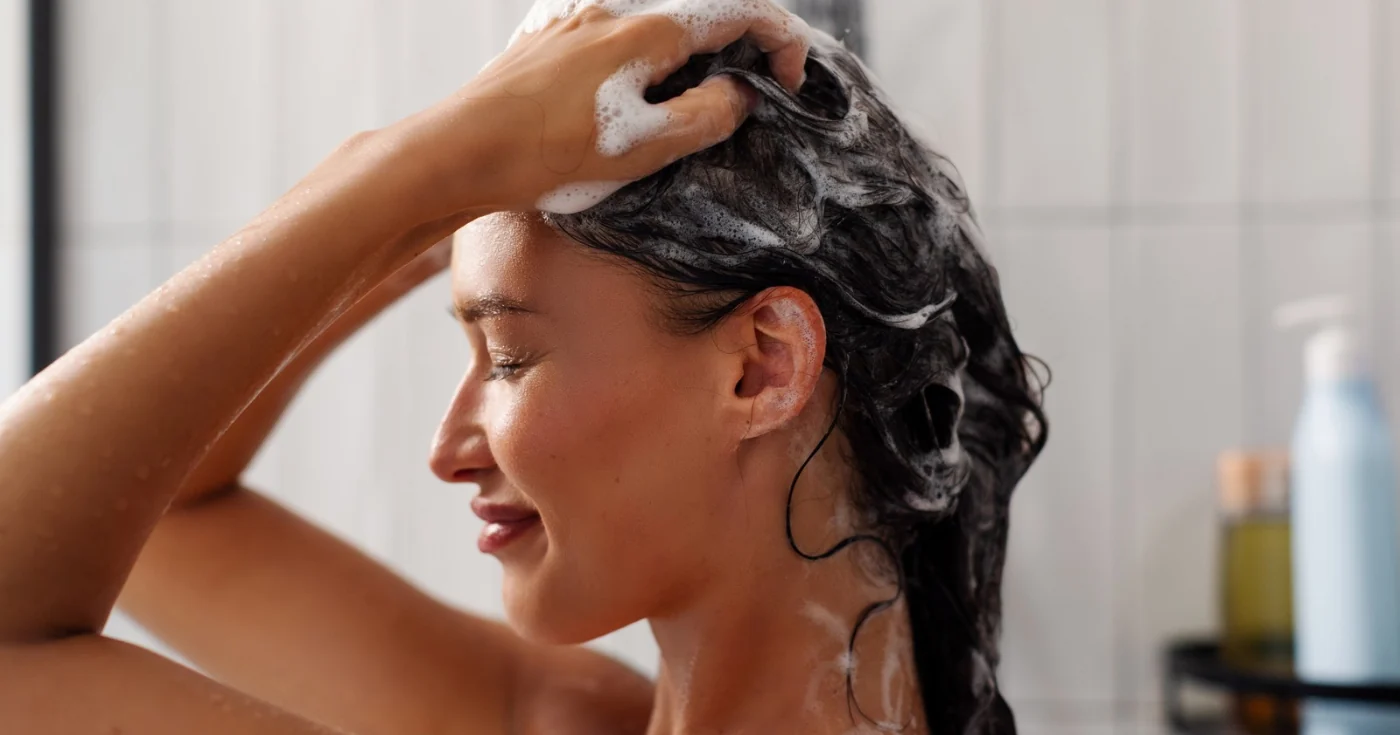
No matter how many times you shampoo, use your favorite conditioner and even spray a little scented mist on your lengths, nothing helps: your hair still gives off an unpleasant smell. Sometimes slightly sour, sometimes oily or even comparable to a musty smell, it seems to return just a few hours after washing. A particularly frustrating situation, especially when you have taken care of your hair so that it is clean and fresh.
However, this phenomenon is not necessarily a sign of poor hygiene. In many cases, the problem is more with the scalp than with the hair itself. Accumulation of sebum, perspiration, treatment residue or dermatological conditions: several factors can explain why freshly washed hair continues to smell bad. And contrary to what one might believe, multiplying shampoos or hair perfumes is not always the right solution.
Why does your hair smell bad even after shampooing?
The first avenue to explore is that of sebum. Naturally produced by the sebaceous glands of the scalp, this lipid film plays an essential role: it protects the skin and helps maintain its hydration. But when it accumulates in excess, it can mix with sweat, dead cells and microorganisms naturally present on the skin’s surface. This combination can gradually cause an unpleasant odor. It is also one of the most common causes of scalp odor problems, as the Cleveland Clinic explains in its file dedicated to , also called smelly scalp syndrome.
Another possible explanation: hair product residue. Poorly rinsed shampoo, conditioner applied too close to the roots, mask, oil, serum or dry shampoo can leave deposits on the scalp. As these residues accumulate, they mix with sebum and perspiration and can contribute to maintaining bad odors. The phenomenon can be particularly marked when you regularly use several styling products without sufficiently cleaning the roots. The American CDC, in its recommendations on scalp hygiene, rightly points out that sebum, dead cells, dirt, perspiration and product residue can accumulate and promote the appearance of unpleasant odors.
Seborrheic dermatitis can also be responsible for this bad smell
If your hair smells bad despite regular washing, it may also be worth taking a look at the condition of your scalp. Certain dermatological conditions can in fact modify its balance and promote the appearance of unusual odors. This is particularly the case for seborrheic dermatitis, a common inflammatory condition which generally manifests itself with dandruff, redness and itching. It is notably associated with the presence of a yeast naturally present on the skin, called , as well as different individual factors linked to sebum and the skin barrier. When it affects the scalp, this condition can be accompanied by an oily appearance and sometimes yellowish scales.
Fungal infections of the scalp, certain bacterial infections or even psoriasis can also be associated with changes in the appearance and odor of the scalp. The Cleveland Clinic lists dandruff, seborrheic dermatitis, fungal infections and psoriasis among possible medical causes of a smelly scalp. Be careful, however: a bad smell is not enough to diagnose a dermatological condition. If it is accompanied by persistent itching, redness, scabs, pain or unusual hair loss, it is better to seek the advice of a dermatologist.
Sources: Cleveland Clinic – Smelly Scalp; MedlinePlus – Seborrheic dermatitis.
Are you not drying your hair enough? This could also explain this smell
Another option, often neglected, concerns drying. If you’re in the habit of leaving your hair damp for several hours, tying it up immediately after a shower, or sleeping with your roots still wet, humidity can linger on your scalp and hair. However, an environment that remains humid and poorly ventilated can promote musty odors. This does not mean that your hair will systematically develop mold, contrary to some ideas circulating on social networks, but it is best not to keep your scalp damp for too long.
Also think about your accessories: a brush used daily, a towel that is difficult to dry or a rarely changed pillowcase can retain sebum, care residue and impurities. They can then contribute to giving the impression of hair that never really smells clean. To limit this phenomenon, get into the habit of regularly cleaning your brushes and combs, letting your towels dry properly and changing your bed linen at an appropriate frequency. These actions obviously do not replace treatment if a scalp condition is involved, but they help avoid certain sources of persistent odors.
What to do to eliminate bad odors from the scalp?
First reflex: rethink the way you wash your hair. It is not enough to lather your shampoo on the lengths. It is above all the scalp that must be cleansed, by gently massaging the roots with the fingertips, without scratching with the nails. Also take the time to rinse thoroughly to remove all product residue. Depending on the nature of your scalp and the amount of sebum produced, a second shampoo can sometimes be useful, especially when the roots are particularly oily or you have used a lot of styling products. The dermatology reference site DermNet recommends massaging the shampoo into the scalp and rinsing it carefully.
Another tip: avoid using multiple products in the hope of masking the smell. Hair perfumes, oils and dry shampoos may provide a temporary solution, but they do not necessarily address the root of the problem. If you also notice dandruff or itching, a suitable anti-dandruff shampoo may be of interest. Health Insurance recommends in particular, in the event of numerous dandruff or beginning seborrheic dermatitis, specific shampoos containing certain active ingredients such as piroctone olamine, selenium sulphide or salicylic acid, while respecting the indications for use. On the other hand, if the bad odor persists despite a suitable routine, or if it is accompanied by unusual symptoms, a medical consultation will help identify the cause and choose the appropriate treatment.
Sources: DermNet – Shampoos; Health insurance – Very numerous dandruff and beginning seborrheic dermatitis.
FAQ: Why does my hair smell bad after shampooing?
Why does my hair smell bad even after washing it?
Several reasons can explain this phenomenon: excess sebum, an accumulation of perspiration and dead cells, residue from hair products or even a scalp condition such as seborrheic dermatitis. In particular, you must check that the shampoo is correctly applied to the roots and rinsed sufficiently.
What disease can cause bad scalp odor?
In particular, seborrheic dermatitis, fungal infections and certain bacterial infections can be associated with unusual odors. They can also cause itching, redness or dandruff. Only a healthcare professional will be able to precisely identify the cause.
Can sebum make hair smell bad?
Yes. When it accumulates, sebum can mix with perspiration, dead cells and microorganisms naturally present on the scalp. This buildup can lead to an oily or unpleasant odor, even after washing.
How to remove a bad smell from hair without re-washing it?
If the smell is light and occasional, you can let your hair air out, dry it completely if it is damp and clean your brush. However, if the odor comes from an accumulation of sebum or residue on the scalp, only appropriate cleansing will really eliminate them.
How often should you wash your hair to avoid bad odors?
There is no universal frequency. It depends in particular on sebum production, perspiration, hair type and styling habits. An oily or sweaty scalp may require more frequent washing than a dry scalp. The main thing is to adopt a frequency adapted to your needs, without letting residue accumulate.
