
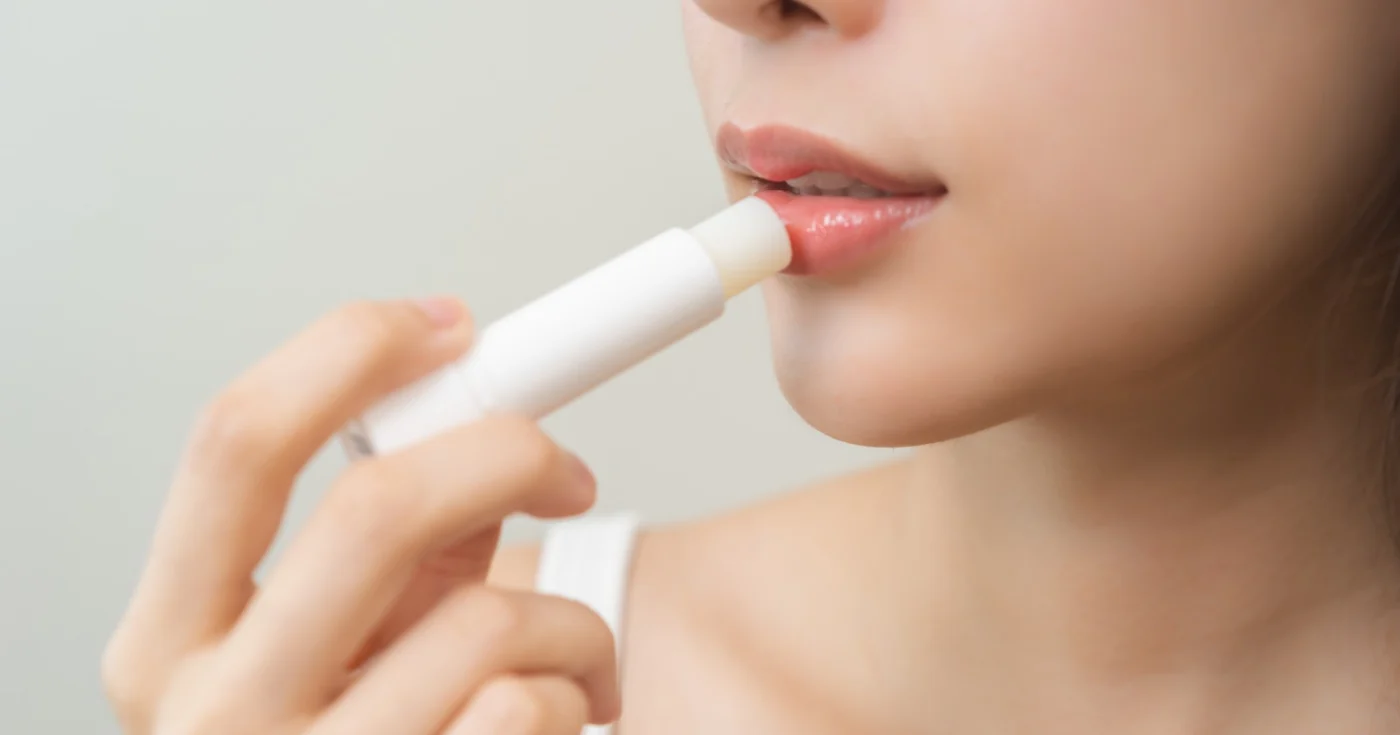
You always have a lip balm on hand: in your bag, on your nightstand or on your desk. However, despite repeated applications, your lips remain dry, tight and even end up peeling. No matter how much you change the texture or multiply the layers, nothing works. What if your lip balm isn’t the solution, but part of the problem?
Because persistently dry lips are not necessarily a sign of simple dehydration. Repeated irritation, an allergy to a cosmetic ingredient or even a habit that we adopt without realizing it can maintain the phenomenon. In some cases, this persistent dryness even corresponds to an inflammation of the lips called cheilitis. Here are the tips to know before buying yet another stick.
Your lip balm could be causing irritation
This is probably the most counterintuitive explanation: Some lip balms may worsen the discomfort they’re supposed to relieve. Lips are particularly sensitive and certain ingredients found in cosmetic products can cause irritation or an allergic reaction. Result: redness, tightness, peeling, small cracks and sometimes itching. This is called contact cheilitis, which can be irritant or allergic.
The American Academy of Dermatology (AAD) particularly warns against certain ingredients likely to irritate already damaged lips: menthol, camphor, eucalyptus, perfumes, certain flavors such as mint, cinnamon or citrus fruits, but also salicylic acid. The feeling of coolness or tingling after application is therefore not necessarily a sign that the product is working. On the contrary, it can indicate irritation. The AAD fact sheet on chapped lips recommends stopping using any product that causes a burning or stinging sensation.
You may have an allergy to your toothpaste
We spontaneously think of lipstick or balm when we look for the origin of a reaction around the mouth. However, the culprit can also be found in the bathroom: your toothpaste. Some of its components, notably flavorings and perfuming agents, may cause a contact reaction. Mint and cinnamon are among the substances that may be involved.
According to DermNet, reactions to oral hygiene products can manifest as eczematous cheilitis: lips become dry, red, irritated, sometimes cracked or itchy. The reaction may also spill over onto the skin around the mouth. If your lips remain uncomfortable despite a neutral balm, it may therefore be useful to also rethink the products that come into contact with them on a daily basis. The DermNet fact sheet on reactions to toothpaste and oral hygiene products details these manifestations.
You have gotten into the habit of moistening your lips with your tongue
It’s an almost automatic reflex: as soon as your lips feel tight, you run your tongue over them to moisten them. At the time, the sensation seems calming. But in the long term, this gesture can maintain the drought. When saliva evaporates, it leaves lips even drier and can irritate their surface. The phenomenon is all the more problematic when it repeats itself throughout the day.
DermNet also identifies repeated licking of the lips as a major cause of irritative cheilitis. Over time, the skin can become red, dry, scaly and crack, sometimes even around the mouth. The reflex should therefore be avoided, even if the feeling of tightness makes you want to start again. The ideal is to replace this gesture with the application of a simple treatment, without perfume or potentially irritating agents.
What if your lips were simply weakened by the sun or the cold?
External conditions obviously remain a frequent cause of drought. Cold, wind and dry air promote chapping, while UV exposure can also damage lips. Their skin is particularly vulnerable: unlike other areas of the face, they do not have sebaceous glands to produce the lipid film which helps protect the skin.
But be careful, dryness that keeps recurring, particularly on the lower lip, sometimes merits a medical examination. Repeated sun exposure can in particular cause actinic cheilitis, a chronic condition of the lips which results in persistent dryness, scales or rough areas. The AAD points out that this condition is precancerous and requires dermatological evaluation. It is not a question of being alarmed by the slightest pimple of dry skin, but of not trivializing an anomaly which persists or evolves.
Which balm to choose to finally repair your lips?
When lips are irritated, it is better to simplify your routine rather than multiplying products. The AAD advises favoring formulas without perfume and aromas, notably containing white vaseline (petrolatum), mineral oil, ceramides or dimethicone. The thicker ointment textures help limit water loss and protect the surface of the lips. On the other hand, it is better to put aside products that tingle, heat or provide a feeling of freshness.
Also remember to apply a protective balm with a minimum SPF 30 when you are out in the sun, to avoid biting or tearing off small skin and to drink enough water. If dryness does not improve after two to three weeks of proper care, or if it is accompanied by pain, swelling, persistent cracks or abnormal areas, consult a dermatologist. Allergic cheilitis may in particular require skin tests to precisely identify the responsible ingredient. The treatment then depends on the cause, and not just on the choice of balm.
FAQ: Questions You Ask About Dry Lips
1. Why do my lips stay dry despite using balm?
Several explanations are possible: a product containing irritating ingredients, a contact allergy, frequent licking of the lips or even a skin condition such as cheilitis. If the problem persists despite a simple routine, dermatological advice may be useful.
2. What ingredients should you avoid in a lip balm?
When lips are irritated, it is best to avoid formulas containing menthol, camphor, eucalyptus, perfumes, mint or cinnamon flavors and certain exfoliating agents such as salicylic acid. Favor simple, fragrance-free formulas.
3. Is it bad to apply lip balm too often?
There is no universal frequency to respect. On the other hand, if you have to constantly reapply because your lips burn or feel tight after each application, the product used may not be suitable. A neutral balm can be applied several times a day, especially before sleeping.
4. Can toothpaste cause dry lips?
Yes. Certain flavors, fragrances or other components of toothpastes may cause an irritant or allergic reaction. This can result in red, dry, peeling or itchy lips, sometimes with irritation around the mouth.
5. When should you consult for persistently dry lips?
If your lips do not improve after two to three weeks of proper care, or if they have persistent cracks, pain, swelling or rough areas that do not go away, seek advice from a healthcare professional. Persistent dryness can sometimes reveal cheilitis requiring specific treatment.
