
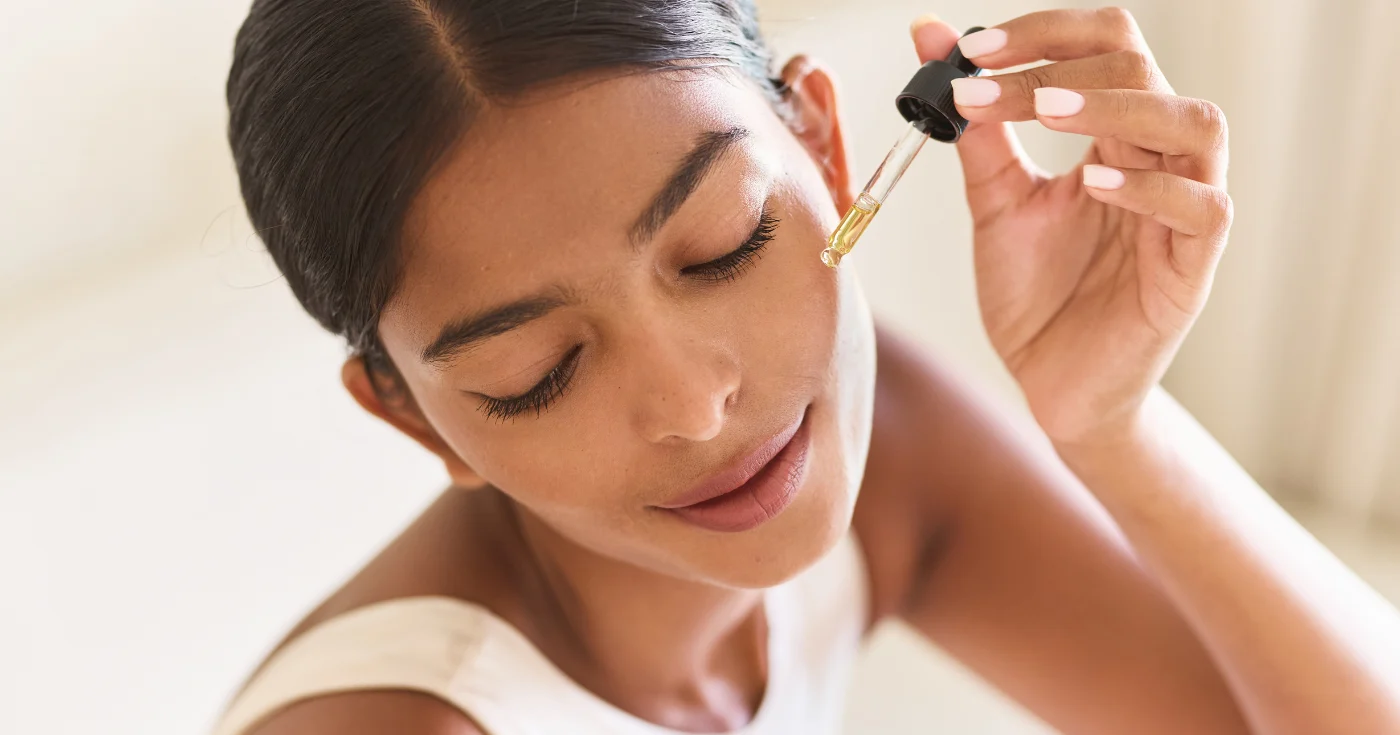
You just have to open any beauty aisle to see it: the ingredient that comes up everywhere is hyaluronic acid. “Plumping” serums, “thirst-quenching” creams, “smoothing” eye contours… everything promises spectacular, almost instantaneous hydration of the skin. Behind this promise, however, a question persists for many: is it really so effective, or above all very well sold to consumers curious about new things?
On TikTok, dermatologist Dr Somji highlighted this gap between hype and scientific reality. For him, yes, hyaluronic acid works, but it is often misapplied and largely overvalued in the hierarchy of a routine. In other words, the star asset is neither useless nor magical. It all depends on how you use it, and in the context of the skin that receives it.
Why hyaluronic acid is everywhere in our facial care
If the cosmetic industry loves hyaluronic acid, it is firstly because it is naturally present in our body. About 50-70% of the total reserve is found in the skin, where it acts as a water reservoir. Its structure allows it to retain up to a thousand times its weight in water, making it a very effective humectant for maintaining skin hydration. On packaging, this scientific argument quickly transforms into a promise of plumped skin in just a few drops.
Another reason for its success: its versatility. It is formulated in light serums for combination skin, rich creams for dry skin, masks, eye contours. The speech is simple and reassuring. However, as Dr Somji points out, many skins do very well without a hyaluronic acid serum, as long as the gentle cleansing duo plus suitable cream is in place, with sun protection during the day.
How Hyaluronic Acid Really Moisturizes Skin
Technically, hyaluronic acid acts like a “molecular sponge”: it attracts water and retains it. We distinguish between the high molecular weight, which remains on the surface to form a film and limit evaporation, and the low molecular weight, capable of further penetrating the epidermis to improve flexibility and elasticity. Studies show that a concentration of just 0.1% can already increase hydration and smooth fine dehydration lines. Chasing very high percentages therefore does not necessarily bring more results.
Where things get complicated is in daily practice. Hyaluronic acid is a humectant: it captures the water available around it. If it is applied to completely dry skin, in heated or air-conditioned air, it can draw water from the deeper layers of the skin and, failing to be “sealed”, promote the loss of water on the surface. Many patients then describe a feeling of tightness after their serum, a situation that dermatologists observe regularly.
Use hyaluronic acid correctly or do without it without feeling guilty
The good reflex is to apply it to slightly damp skin, after cleansing or a mist, then follow with a cream that contains protective lipids (ceramides, vegetable oils, butters). This final layer limits evaporation and allows the water captured by hyaluronic acid to remain in the epidermis. A single product containing this active ingredient in the routine is more than enough, there is no need to multiply serum, cream and mask all enriched with hyaluronic acid in the same evening.
It is particularly useful for dehydrated skin, those with fine lines, or for people undergoing drying treatments such as retinoids or certain exfoliating active ingredients. A hydrating gel with hyaluronic acid can also be suitable for oily skin, because it hydrates without greasing. On the other hand, for very dry skin with a damaged barrier, the priority remains to restore lipids, hyaluronic acid alone is not enough. And if your skin is comfortable with a simple, well-formulated cream, the absence of a hyaluronic acid serum is not a lack of care.
Is hyaluronic acid really effective in hydrating the skin?
Yes, used as a humectant, it improves skin hydration and elasticity, even at low doses. Its effectiveness depends above all on the context: slightly damp skin, well-thought-out formula and cream applied on top.
Can hyaluronic acid dry out skin?
In dry or heated air, placed on completely dry skin without cream afterwards, it can promote water loss and give a feeling of tightness. Systematically combining it with a cream limits this risk.
What concentration of hyaluronic acid should you choose in a serum?
Research shows that around 0.1% is already enough to improve hydration. It is better to look at the texture, other moisturizing agents and tolerance rather than relying solely on the percentage displayed.
At what age should you start using hyaluronic acid in cosmetics?
The natural amount of hyaluronic acid in the skin begins to decrease around age 25 to 30. It can be introduced at this age in case of signs of dehydration, but it is not an obligation if the skin is doing well.
