
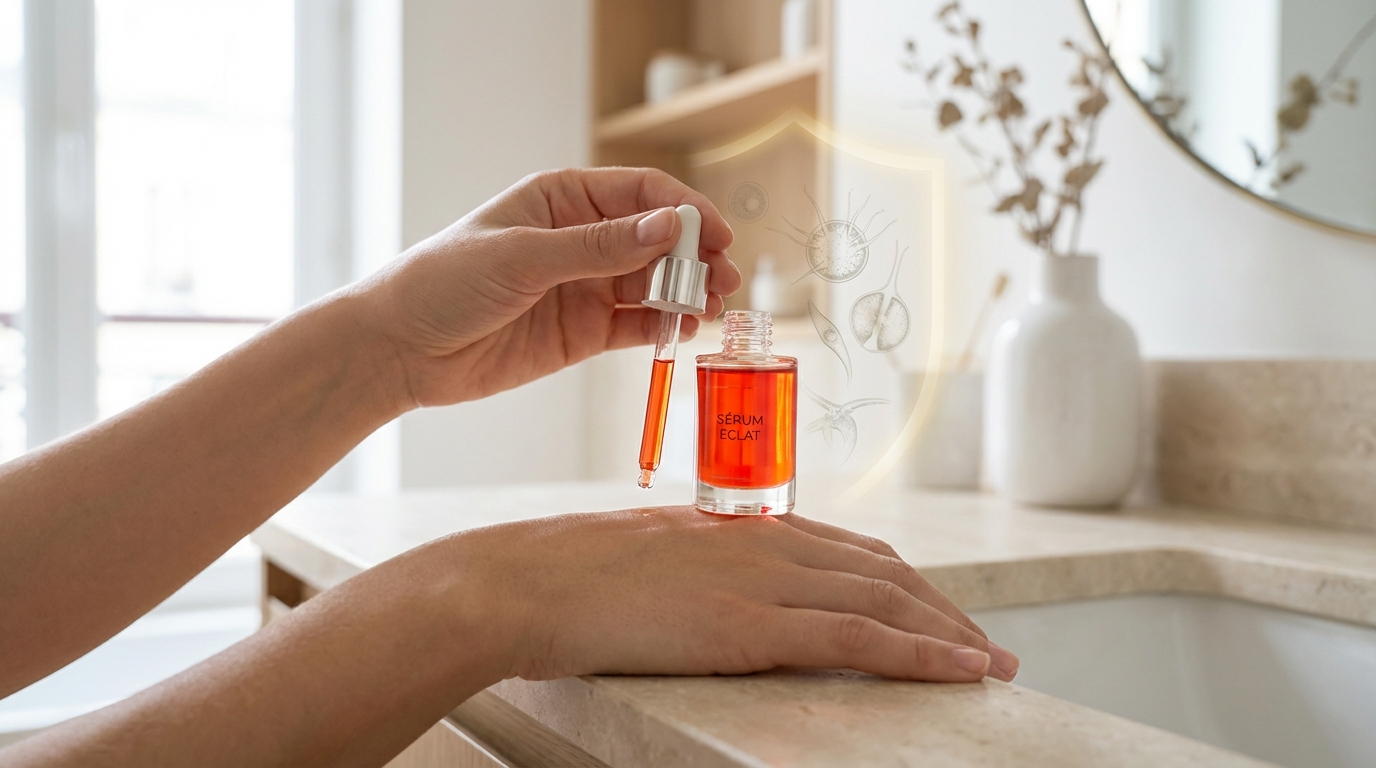
Between the desire for luminous skin and the fear of redness, many anti-aging routines resemble a balancing act. Retinol that stings, vitamin C that heats, protocol to follow: sensitive skin saturates quickly. What if an active ingredient managed to reconcile effectiveness and absolute comfort?
This outsider is called astaxanthin, an antioxidant pigment extracted from freshwater microalgae, which also colors certain marine animals. Experts present it as a powerful antioxidant but very gentle on the skin barrier. Some even suggest that it is up to 6,000 times more powerful than vitamin C in neutralizing cell oxidation.
Astaxanthin: the anti-aging active ingredient that reassures sensitive skin
Retinol, however, remains one of the most studied anti-aging active ingredients, capable of acting on both the epidermis and the dermis to smooth wrinkles, spots and irregularities. But its introduction requires a real protocol, with gradual application, rich cream and high sun index. Vanessa Training Manager France at Elizabeth Arden points out that a phase of ‘retinization’ with tightness, redness and small flaking is common before the skin gets used to it.
Sensitive skin is therefore looking for alternatives capable of targeting the same signs of aging without weakening the epidermis. Antioxidants such as ferulic acid have shown that by neutralizing free radicals from UV rays, pollution, tobacco or stress, they preserve collagen, elastin and hyaluronic acid. Less oxidative damage means fewer wrinkles, better firmness and a complexion with fewer spots.
6000 times more powerful than vitamin C: what astaxanthin promises
In this family of antioxidants, astaxanthin stands out due to its structure which literally envelops the membrane of skin cells. Expert articles describe long-lasting protection against free radicals, where some antioxidants are quickly depleted. Dominic Hawksley, founder of Olverum, estimates that this molecule is up to 6,000 times more powerful than vitamin C in neutralizing cell oxidation.
Concretely, this helps limit the premature degradation of collagen, elastin and hyaluronic acid, the pillars of firm and plump skin. Testimonials collected in the beauty press speak of skin that is more supple, better hydrated and above all more luminous with each application. This boost in radiance and comfort visually gives the impression of a more uniform complexion, without burning sensations or tightness.
How to use astaxanthin in your routine without the effects of retinol
In skincare, astaxanthin is mainly found in anti-aging serums and creams with an orange-red tint, to be applied to clean skin. Its high photostability means that it does not degrade in the sun, which allows use in the morning. Slip it under a moisturizer then sun protection, to strengthen the daily antioxidant shield without changing your entire routine.
Those who wish can also opt for food supplements based on astaxanthin, by first seeking advice from a health professional. For very reactive skin, it is a reassuring option compared to retinol, which is sometimes difficult to tolerate. And then nothing prevents, for accustomed skin and followed by a dermatologist, combining astaxanthin in the morning and retinol in the evening, in order to combine antioxidant shield and resurfacing action.
What is astaxanthin in anti-aging cosmetics?
An antioxidant pigment from freshwater microalgae, it helps the skin resist oxidative stress responsible for premature aging.
Can astaxanthin replace retinol for wrinkles?
It does not exfoliate like retinol, but offers a gentle anti-aging alternative, particularly interesting for sensitive or reactive skin.
How to integrate astaxanthin with vitamin C into a routine?
It is mainly used in the morning under moisturizer and sun protection, in addition to a well-tolerated vitamin C to enhance radiance.
